PSI vs GPM Pressure Washer: What Matters More?
If you are comparing pressure washers, you will see two numbers over and over: PSI and GPM. The problem is that most shoppers notice the bigger number first, and that is usually PSI.
That makes sense. PSI looks impressive. A pressure washer with 3,000 PSI sounds much stronger than one with 2,000 PSI.
But when it comes to a PSI vs GPM pressure washer decision, the real answer is not “always buy the highest PSI.” PSI and GPM do different jobs. If you understand both, you are much less likely to buy the wrong machine for your driveway, deck, siding, car, patio furniture, or outdoor cleanup jobs.
Quick Answer: PSI vs GPM Pressure Washer
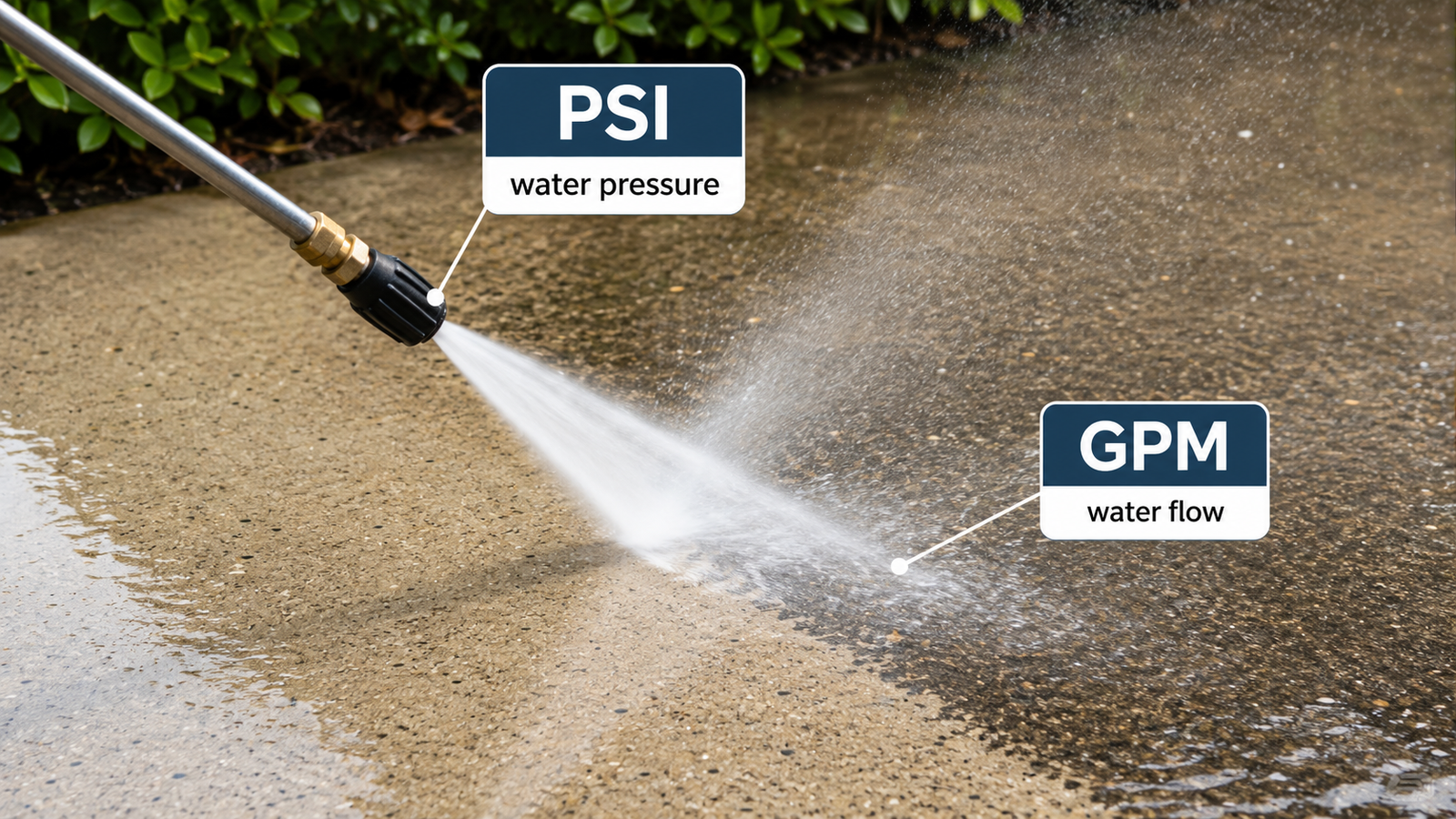
PSI is the force of the water. GPM is how much water the pressure washer moves.
For many homeowners, PSI helps break dirt loose, while GPM helps rinse it away. A pressure washer with very high PSI but low GPM may feel powerful on paper, but it can be slower for larger cleaning jobs. A machine with a good balance of PSI and GPM is usually more useful than one that wins on one number only.
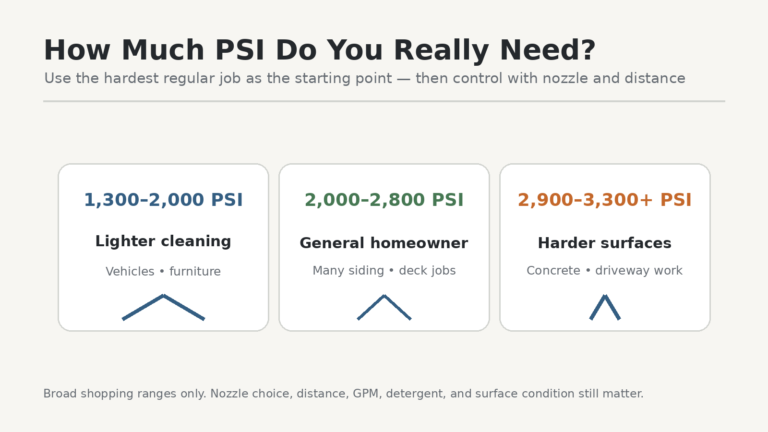
For light jobs like cars, patio furniture, and vinyl siding, you usually do not need extreme PSI. For concrete, brick, and large flat surfaces, more GPM can make a noticeable difference because you are moving more water across the surface.
The best pressure washer is not the one with the biggest number. It is the one that matches the job.
#ad
Once you know the pressure-and-flow range you actually need, these Amazon searches are a better starting point than a random model:
What PSI Means on a Pressure Washer
PSI stands for pounds per square inch. In simple terms, it tells you how much pressure the water has when it leaves the nozzle.
Higher PSI means the water hits with more force.
That force can be useful when you are trying to loosen stuck-on dirt, mildew, algae, or grime. It is one reason people pay attention to PSI when shopping for a pressure washer.
But PSI is also the number that can get people into trouble.
Too much pressure, used too close to the surface, can damage wood, strip paint, scar concrete, force water behind siding, or damage car paint and trim. The pressure washer does not know whether you are cleaning safely. It only knows how much force it is sending through the nozzle.
That is why PSI should not be treated like a score in a video game. Bigger is not automatically better.
Where PSI Matters Most
PSI matters most when the job requires breaking the bond between dirt and the surface.
That can include:
- Old grime on concrete
- Mud on equipment
- Moss or algae on hard surfaces
- Stains on masonry
- Dirty outdoor tools or plastic items
Even then, more pressure is not always the first answer. The right nozzle, proper distance, cleaning solution, and patience can matter just as much.
What GPM Means on a Pressure Washer
GPM stands for gallons per minute. It tells you how much water the pressure washer moves. Simpson’s pressure-washer FAQ describes PSI as the stripping or scrubbing force and GPM as the rinsing power, which is why the two specifications should be considered together.
If PSI is the force, GPM is the flow.
This is the number many homeowners overlook, but it matters a lot. Water flow is what carries loosened dirt away. It also helps you cover more area in less time.
A low-GPM pressure washer can still clean, but it may feel slower on big jobs because there is less water doing the rinsing. You may break the dirt loose, then spend more time chasing dirty water, streaks, and leftover debris.
A higher-GPM machine can feel more efficient because it moves more water across the surface.
Where GPM Matters Most
GPM matters most on jobs where you are cleaning a larger area or need to rinse a lot of loose dirt away.
That can include:
- Driveways
- Sidewalks
- Patios
- Large decks
- Fences
- House siding
- Outdoor equipment
This is why some people are disappointed when they buy a pressure washer based only on PSI. The machine may have plenty of force, but not enough flow to make the job feel quick.
PSI vs GPM Pressure Washer Specs: Which One Should You Prioritize?
For most homeowners, the better question is not “PSI or GPM?” It is “What balance do I need for the jobs I actually do?”
A pressure washer is not just a pressure machine. It is a cleaning system. PSI, GPM, nozzle angle, hose quality, pump type, surface cleaner size, detergent, and technique all work together.
If you only shop by PSI, you may buy a machine that looks powerful but feels slow.
If you only shop by GPM, you may overlook whether the machine has enough pressure for stuck-on grime.
The practical answer is balance.
For Light Homeowner Jobs
For washing patio furniture, trash cans, garden tools, bikes, grills, and other lighter jobs, you usually do not need extreme pressure.
In these cases, a lower-to-moderate PSI electric pressure washer can be easier to use, easier to store, and less intimidating. GPM still matters, but you may not need a heavy gas unit just to clean small items around the house.
This is also where nozzle choice matters. A wider spray pattern is usually safer and more forgiving than a narrow, aggressive spray.
For Cars and Vehicles
Car washing is one of the places where chasing PSI can be a mistake.
You want enough pressure to rinse dirt and soap, but not so much that you risk damaging paint, trim, weather stripping, decals, or sensors. A foam cannon, car-safe soap, and a wide nozzle are often more important than raw PSI.
For vehicle washing, control matters more than bragging rights.
For Concrete and Driveways
Concrete is where people often assume they need the highest PSI they can afford.
Concrete can handle more pressure than many surfaces, but GPM still matters. A pressure washer with stronger flow can help move dirty water and loosened grime faster. If you are cleaning a large driveway, low GPM can make the job feel painfully slow.
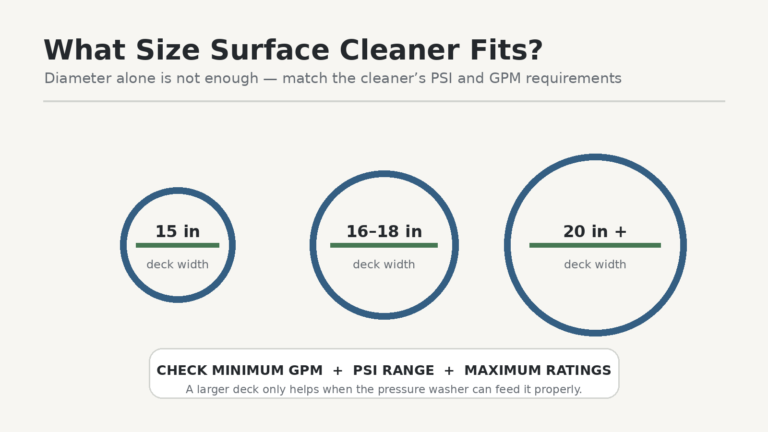
A surface cleaner can also make a major difference on concrete because it helps clean evenly and reduces streaks compared with waving a wand back and forth.
For Siding and House Washing
With siding, caution matters.
Too much pressure can force water behind siding or into places it should not go. For house washing, technique, distance, nozzle choice, and cleaning solution often matter more than raw PSI.
This is one of those jobs where “more power” can cause problems if used carelessly.
Why Cleaning Units Can Be Helpful but Imperfect
You may also see “cleaning units” mentioned when comparing pressure washers.
Cleaning units are usually calculated by multiplying PSI by GPM, the same formula documented in Simpson’s manufacturer guidance.
For example:
2,000 PSI x 1.2 GPM = 2,400 cleaning units
This can be useful because it reminds you that both pressure and water flow matter. A machine with slightly lower PSI but better GPM may perform better than the PSI number alone suggests.
But cleaning units are not a perfect buying shortcut.
They do not tell you about pump quality, nozzle performance, hose flexibility, motor durability, noise, storage, weight, warranty, or how comfortable the machine is to use. They also do not tell you whether a pressure washer is appropriate for your specific surface.
Use cleaning units as a clue, not as the whole decision.
Electric vs Gas Pressure Washers and the PSI/GPM Tradeoff
Electric pressure washers are usually easier to store, easier to start, quieter, and better suited for lighter homeowner jobs. Many electric models have enough pressure for routine cleaning around the house.
The tradeoff is that electric units often have lower GPM than gas models. That can make larger jobs take longer.
Gas pressure washers are usually more powerful and often move more water. That can help with concrete, large patios, long fences, and other bigger jobs. The tradeoff is more noise, more maintenance, more weight, fuel storage, and a higher level of care when using the machine.
Neither type is automatically better.
Electric often makes sense for lighter, occasional cleaning.
Gas often makes sense for larger jobs, tougher surfaces, and people who need more cleaning speed.
What This Means Before You Buy
Before buying a pressure washer, think about your actual jobs, not just the biggest number on the box.
Ask yourself:
- Am I mostly washing cars, patio furniture, and small outdoor items?
- Am I cleaning concrete, sidewalks, or a driveway?
- Do I need something light and easy to store?
- Will I use it often enough to justify a gas model?
- Do I need accessories like a surface cleaner or better hose?
- Am I comfortable using higher pressure safely?
For many homeowners, the best choice is a balanced pressure washer with enough PSI to loosen dirt and enough GPM to rinse efficiently.
If you are cleaning small items and vehicles, control and convenience matter.
If you are cleaning large concrete areas, flow and accessories matter more than people realize.
Common PSI and GPM Buying Mistakes
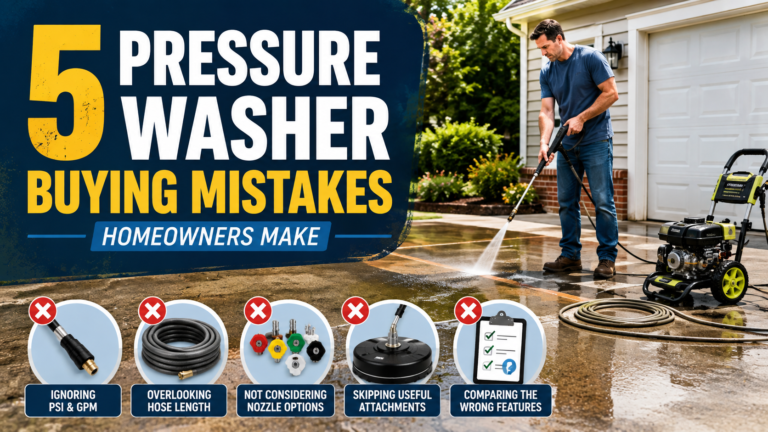
For a broader checklist covering machine type, accessories, and surface risk as well as specifications, see 5 Pressure Washer Buying Mistakes Homeowners Make.
Mistake 1: Buying Only the Highest PSI
High PSI looks impressive, but it is not always useful. It can also increase the risk of damage if you use the wrong nozzle or get too close to the surface.
For many homeowner jobs, controlled pressure is better than maximum pressure.
Mistake 2: Ignoring GPM Completely
GPM is easy to overlook because it is usually a smaller number. But water flow affects rinsing speed and cleaning efficiency.
If you are cleaning large areas, GPM can matter more than you expect.
Mistake 3: Using the Wrong Nozzle
A pressure washer nozzle changes how aggressive the spray is. A narrow tip concentrates pressure into a smaller area. A wider tip spreads the water out and is usually safer for more delicate jobs.
The machine’s PSI is only part of the story. The nozzle changes how that pressure reaches the surface.
Mistake 4: Thinking One Pressure Washer Is Perfect for Every Job
A pressure washer that is great for concrete may be too aggressive or inconvenient for car washing. A small electric unit that is great for patio furniture may feel slow on a large driveway.
There is no single perfect machine for everyone.
Mistake 5: Forgetting About Accessories
Sometimes the accessory matters almost as much as the pressure washer.
A surface cleaner can help with concrete. A longer hose can reduce frustration. The right nozzle can prevent damage. A foam cannon can make car washing easier.
Buying the pressure washer is only part of the setup.
Simple Buying Examples
Mostly Small Cleaning Jobs
If you mostly want to clean patio chairs, garbage cans, bikes, garden tools, and small areas, a moderate electric pressure washer is probably enough.
You do not need to chase the highest PSI.
Mostly Car Washing
Look for control, gentle rinsing, wide nozzle options, and compatibility with a foam cannon. Avoid treating a vehicle like a concrete driveway.
Mostly Concrete and Driveways
Pay closer attention to GPM, surface cleaner compatibility, hose length, and overall cleaning speed. PSI still matters, but water flow and accessories can make the job much less annoying.
Mixed Homeowner Use
If you want one machine for several jobs, look for balance. You want enough pressure for tough spots, but not so much that every job feels risky.
This is where many homeowners are happiest with a practical mid-range choice instead of the most powerful machine they can find.
Bottom Line
When comparing PSI vs GPM pressure washer specs, do not let the bigger number make the decision for you.
PSI tells you how much force the water has.
GPM tells you how much water the machine moves.
For small jobs, convenience and control may matter more than raw power. For large jobs like concrete and driveways, GPM and accessories can make a big difference in how fast and evenly you clean.
The smartest pressure washer choice is not the one with the highest PSI. It is the one with the right balance for the work you actually plan to do.
Related Reading
- Pressure Washer Buying Guides
- Product Specs Explained
- Electric vs Gas Pressure Washer: Which One Should Homeowners Buy?
- What Size Pressure Washer Do You Need for Concrete?
- Do You Need a Surface Cleaner for a Pressure Washer?
- Pressure Washer Nozzles Explained: Which Color Tip Should You Use?