DuroMax XP13000HXT on Gasoline vs Propane vs Natural Gas: How Much Output Changes
The XP13000HXT makes its highest output on gasoline and its lowest on natural gas. Compare the published running watts, peak watts and runtime tradeoffs.
Plain-English guides to portable generators, backup power, wattage, generator cords, safety basics, and the accessories homeowners should understand before buying.
The XP13000HXT makes its highest output on gasoline and its lowest on natural gas. Compare the published running watts, peak watts and runtime tradeoffs.
The XP13000HXT requires 6–9 inches of water-column natural-gas pressure and up to 225,000 BTU/hr at full load. Here is what those numbers mean before connecting it.
Possibly. DuroMax says the XP13000HXT can power home essentials including AC, but your air conditioner’s voltage, running load and startup demand still decide the answer.
A source-checked DuroMax XP13000HXT product hub covering gasoline, propane and natural-gas output, runtime, outlets, home-backup questions and the limits that matter before buying.
A source-checked Westinghouse WGen9500DFc data sheet with watt and amp limits, fuel-use math, outlet limits, altitude derating, THD, dimensions and buyer FAQs.
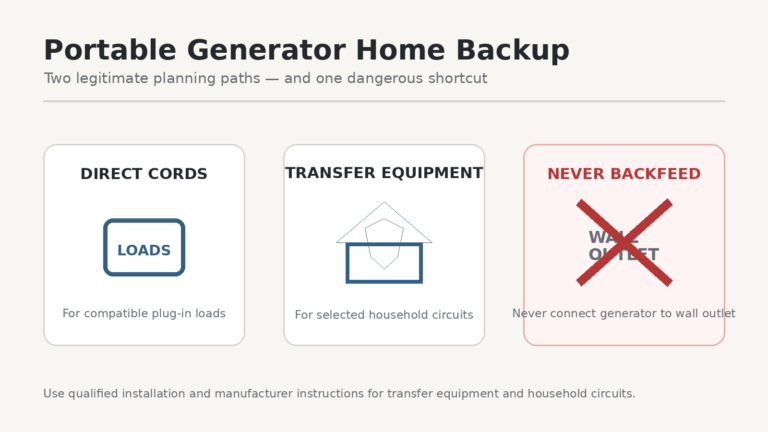
A portable generator can power individual cord-connected appliances or selected circuits through professionally installed transfer equipment. Those are different connection plans with different hardware, loads, and responsibilities. What it must never do is energize house wiring through a wall receptacle. That is backfeeding. It can put lethal voltage on utility lines, defeat household protections, start…
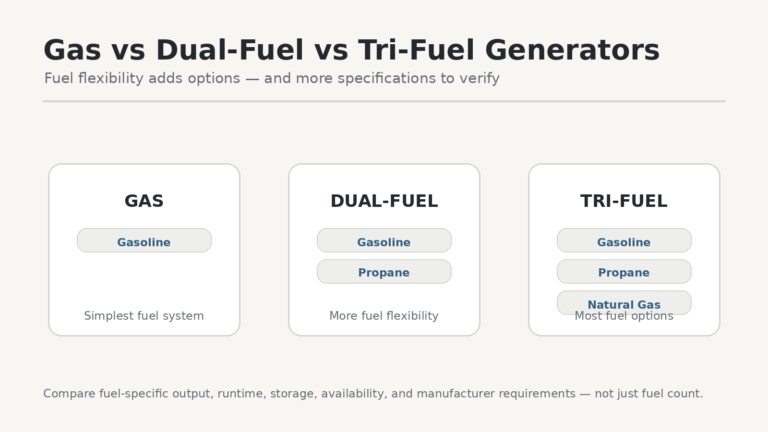
Gasoline, dual-fuel, and tri-fuel portable generators can share the same engine size yet deliver different output, runtime, storage, and connection tradeoffs. Fuel flexibility is useful during an outage, but every added fuel system also adds specifications to verify. A gas-only generator is often the simplest and least expensive. Dual-fuel adds propane. Tri-fuel adds both propane…
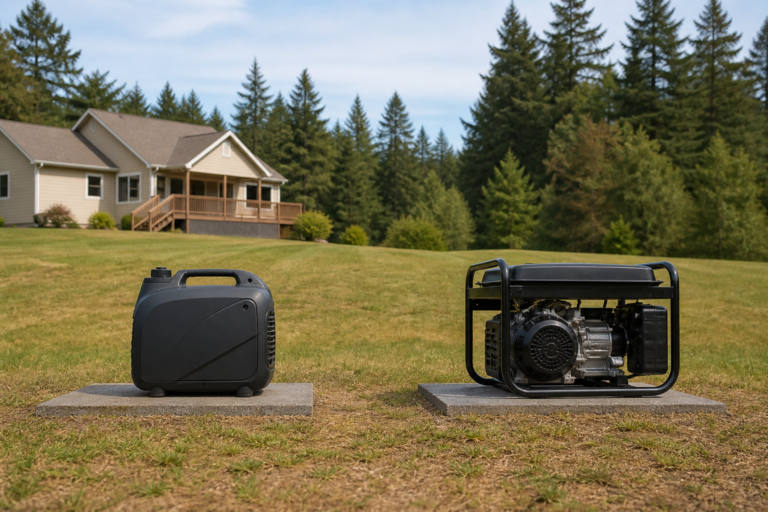
“Inverter” and “conventional” describe how a generator produces and regulates electricity. They do not tell you whether a model has enough watts, the right voltage, safe carbon-monoxide protection, or the outlets your backup plan requires. Inverter generators are often quieter and more fuel-efficient at light loads. Conventional open-frame generators often deliver more watts per dollar….
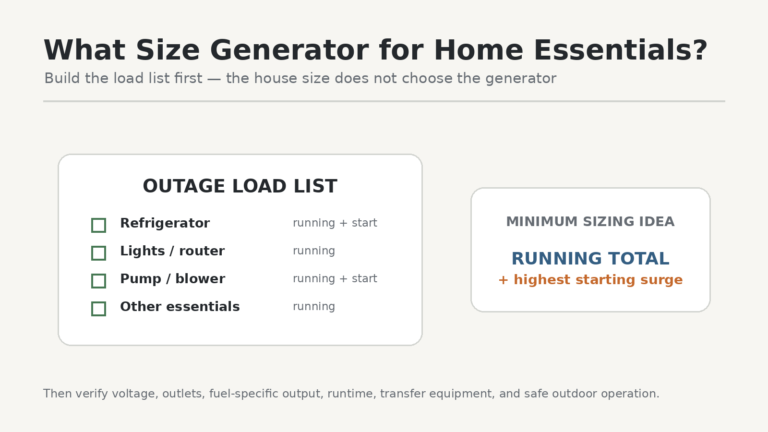
A portable generator for “home essentials” can mean a small unit for a refrigerator and a few lights or a much larger 120/240-volt machine for pumps and selected hardwired circuits. The right size comes from your outage load list, not a generic house-size chart. This guide gives you a practical sizing process, example load plans,…
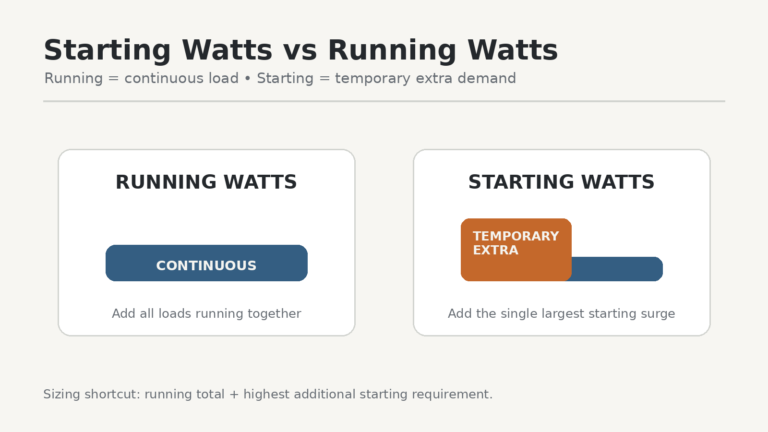
Portable generator labels usually lead with the largest wattage number. That number may be the generator’s short starting output, not the power it can deliver continuously. If you size a generator by the biggest number on the box, you can still end up with too little continuous power, the wrong outlets, or a machine that…