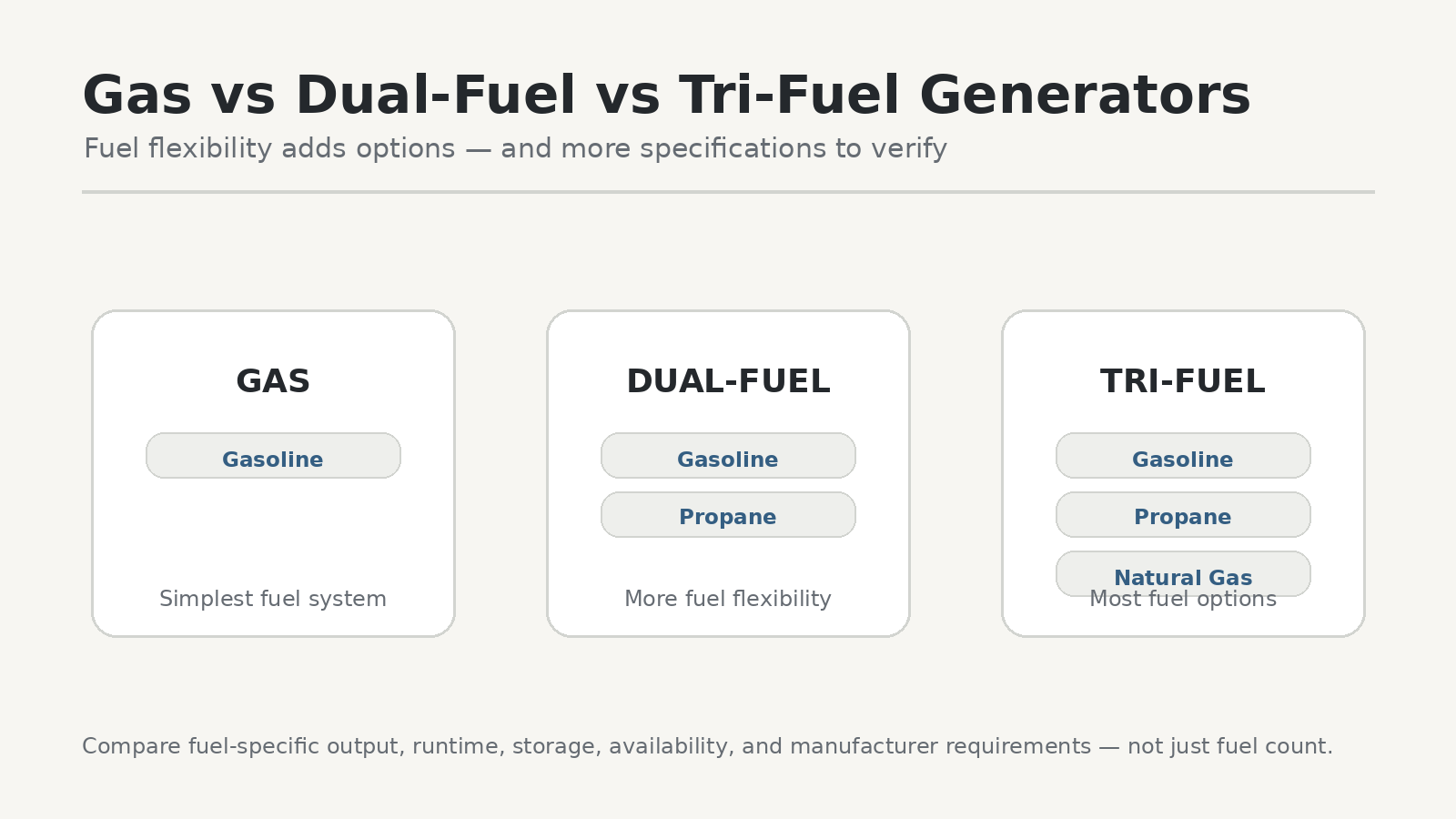
Gas vs Dual-Fuel vs Tri-Fuel Generators
Gasoline, dual-fuel, and tri-fuel portable generators can share the same engine size yet deliver different output, runtime, storage, and connection tradeoffs. Fuel flexibility is useful during an outage, but every added fuel system also adds specifications to verify.
A gas-only generator is often the simplest and least expensive. Dual-fuel adds propane. Tri-fuel adds both propane and natural gas—but natural-gas operation requires a correctly sized, professionally evaluated supply.
Quick Comparison
| Type | Fuel choices | Main advantage | Main limitation |
|---|---|---|---|
| Gasoline | Gasoline | High output and wide availability | Shorter storage life and difficult storm demand |
| Dual-fuel | Gasoline or propane | Stored-cylinder flexibility | Usually lower watts on propane |
| Tri-fuel | Gasoline, propane, or natural gas | Can use a utility fuel supply when available | Lowest output is often on natural gas; gas-line capacity matters |
Gasoline: Highest Output, Most Familiar Handling
Gasoline commonly produces a model’s highest advertised running and starting watts. It is easy to transport in approved containers and is supported by nearly every portable generator.
The disadvantages appear during storage and prolonged outages. Gasoline ages, can create carburetor deposits, and may be scarce after a major storm. It must be stored outside living areas in approved containers and according to local fire rules. Never refuel a running or hot generator; shut it down and let it cool as the manual directs.
Propane: Easier Stored-Fuel Rotation
Propane is sealed in a cylinder rather than sitting in a carburetor and tank. That makes it attractive for preparedness, provided cylinders are stored, transported, and inspected correctly.
Output is commonly lower than on gasoline. Generac’s GP7500E Dual Fuel is rated at 7,500 running watts on gasoline and 6,800 on propane. The same fuel penalty can reduce motor-starting headroom, so size the generator using the rating for the fuel you will actually operate.
Cold weather, cylinder size, regulator capacity, and fuel level affect vaporization. A small cylinder can be inadequate for a large engine even when it contains fuel. Follow the generator and cylinder instructions rather than improvising regulators or manifolds.
Natural Gas: Convenient Supply, Lowest Typical Output
A tri-fuel model can connect to an approved natural-gas supply. That avoids pouring fuel and may support long outages if utility service remains available.
Natural gas is not automatically unlimited or guaranteed. Earthquakes, utility shutoffs, storm damage, and local emergencies can interrupt service. The home’s meter, piping, pressure, distance, fittings, and other gas appliances must support the generator’s demand.
Use qualified gas-plumbing help for the connection. Do not attach a generator to an improvised indoor appliance connector or route it through an occupied building.
Fuel Type Changes the Wattage
Compare ratings fuel by fuel. Champion’s 6,500-running-watt tri-fuel model is rated at 6,500 watts on gasoline, 6,000 on propane, and 5,500 on natural gas. Its starting ratings also decline by fuel.
| Published example | Gasoline | Propane | Natural gas |
|---|---|---|---|
| Champion model 201169 running watts | 6,500 | 6,000 | 5,500 |
| Champion model 201169 starting watts | 8,125 | 7,500 | 6,875 |
This table illustrates the pattern; it is not a recommendation for that model. Always use the current specification sheet for the exact unit.
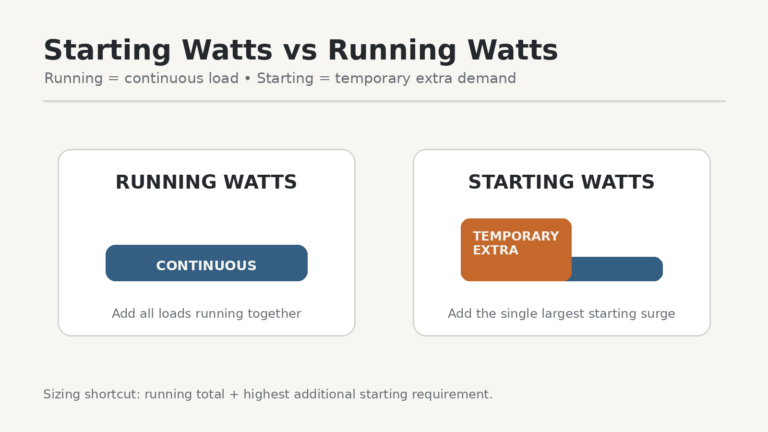
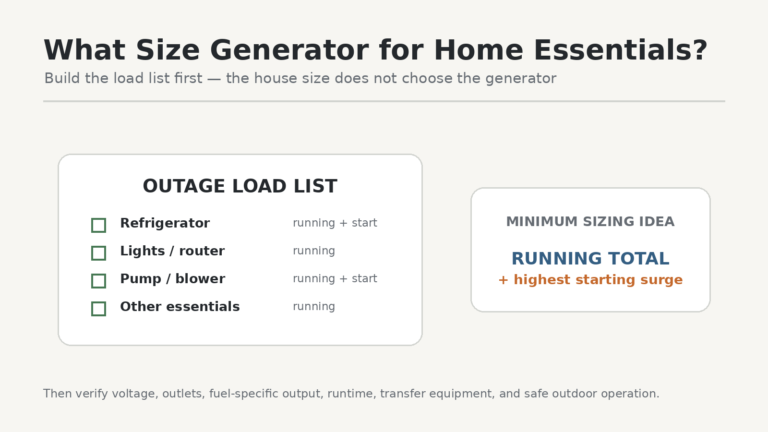
Recalculate your outage plan on the lowest-output fuel you expect to use. See Starting Watts vs Running Watts and What Size Portable Generator for Home Essentials?.
Runtime Claims Need the Fuel and Load
A gasoline runtime usually references a full onboard tank. A propane runtime references a stated cylinder size. Natural-gas runtime may be described as continuous because fuel comes through a line.
Compare hours at the same load. Generac’s dual-fuel specification lists up to 10 hours at 50% load on gasoline and 5 hours at 50% load from a 20-pound propane cylinder. Tank or cylinder size alone does not reveal efficiency.
Does Fuel Flexibility Justify the Price?
Choose Gas-Only When…
- Initial cost and maximum watts per dollar matter most.
- You can rotate stabilized fuel and maintain the carburetor correctly.
- Your outage plan has a realistic gasoline supply.
Choose Dual-Fuel When…
- You want propane storage plus gasoline’s higher output.
- You can store cylinders safely and size them for the load and weather.
- The propane rating still starts your largest motor.
Choose Tri-Fuel When…
- A qualified professional confirms an outdoor natural-gas connection and adequate supply.
- The natural-gas wattage still covers your essential loads.
- You value redundancy enough to accept extra cost, weight, and complexity.
Inverter vs. Open-Frame Is a Separate Choice
Fuel capability does not determine generator architecture. Gas-only, dual-fuel, and tri-fuel models can be inverter or conventional designs. Compare noise, runtime, THD, voltage, and capacity separately in Inverter vs Conventional Generator.
Safety Rules Are Identical for Every Fuel
Gasoline, propane, and natural gas engines all produce carbon monoxide. CPSC says to operate portable generators outdoors only, at least 20 feet from homes and buildings, with exhaust pointed away from doors, windows, and vents. Never operate one in a garage, basement, shed, carport, porch, or other enclosed or partly enclosed area.
Install working CO alarms on every level and outside sleeping areas. A CO shutoff is backup protection, not permission to operate closer.
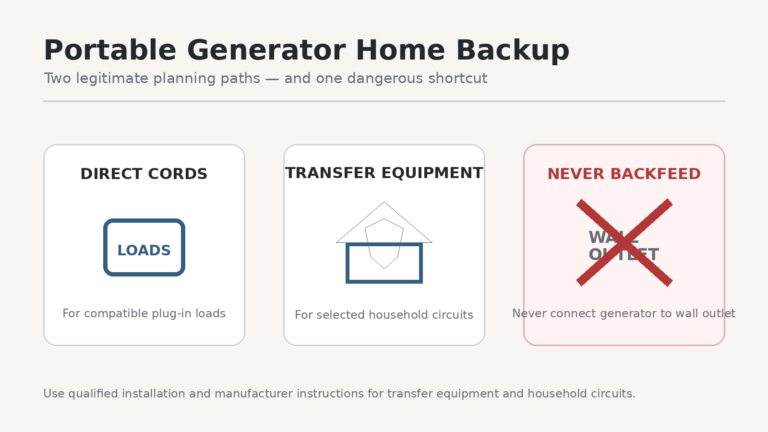
Never backfeed house wiring through a wall receptacle. Use properly installed transfer equipment selected for the generator and electrical system.
Primary sources: Champion tri-fuel specifications, Generac dual-fuel specifications, and CPSC carbon-monoxide guidance.
Bottom Line
Gasoline usually provides the most watts. Propane improves stored-fuel flexibility. Natural gas can simplify long-duration operation when a properly sized utility supply remains available.
Choose based on the lowest fuel-specific output you will rely on, runtime at the same load, safe storage and connection, local availability, and the maintenance you will actually perform.