Pressure Washer Hose Length and Diameter: What Homeowners Overlook
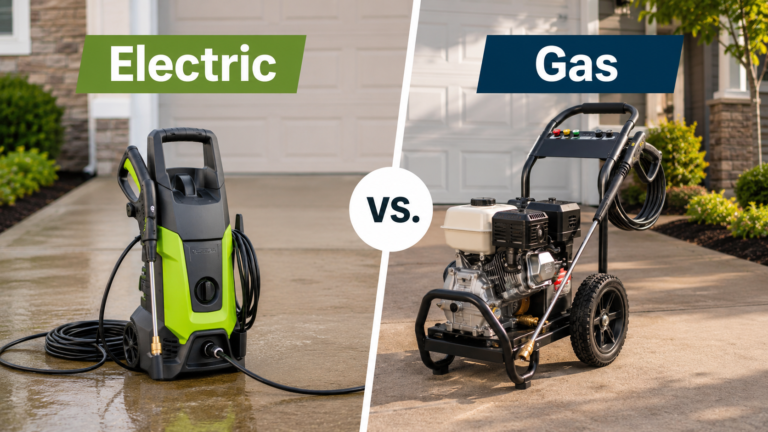
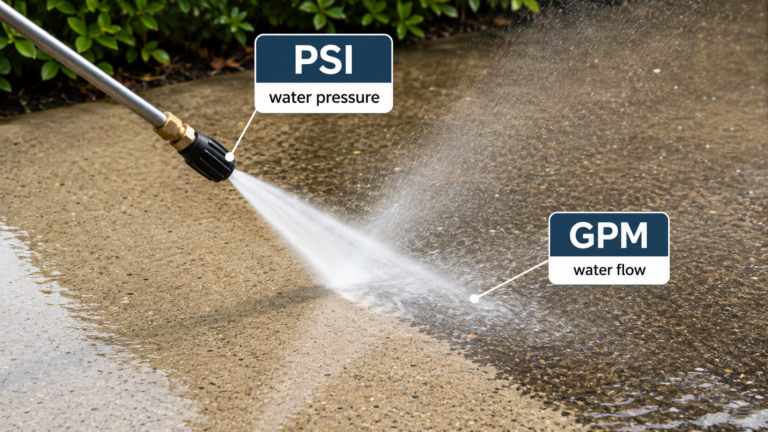
Pressure-washer shopping usually focuses on the machine: PSI, GPM, electric or gas, maybe the nozzle set.
The hose gets treated like packaging.
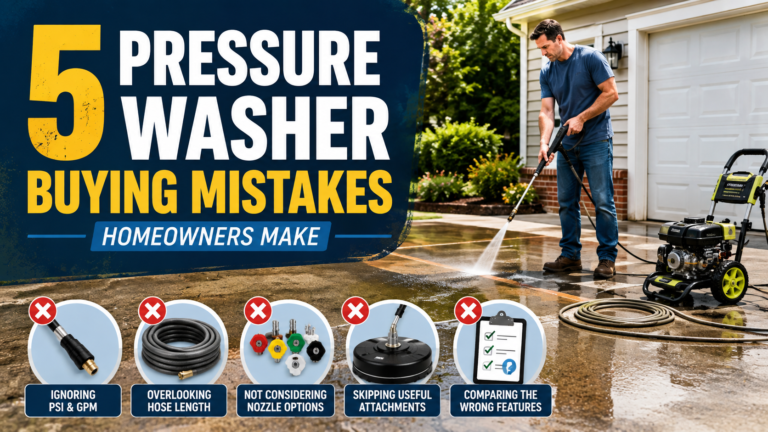
That is a mistake. A hose determines how far you can work without moving the machine, how easily the setup kinks and drags, and whether the fittings, pressure rating, temperature rating, and diameter actually match the washer.
The good news is that you do not need a magic “best hose length.” You need a hose that fits the machine and the way you clean.
Quick Answer
Longer hose gives you more reach, but choose by compatibility first.
Verify:
- maximum working pressure
- hose inside diameter
- fitting type and size
- hot- or cold-water rating
- maximum temperature
- whether the manufacturer approves it as a replacement or extension
- length and flexibility
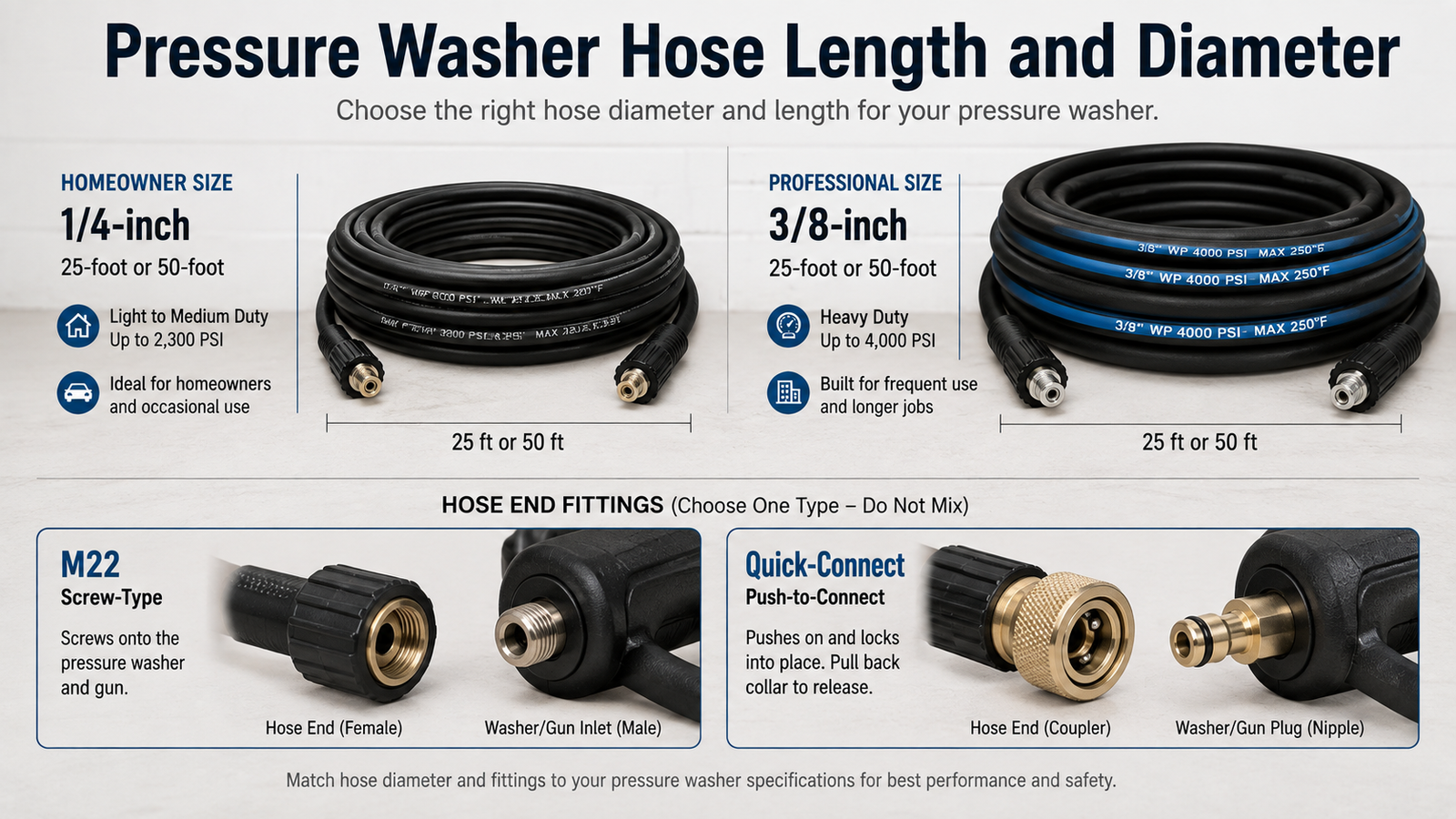
For many homeowner electric pressure washers, factory hoses around 20–25 feet are common. Heavier gas machines often use larger 3/8-inch high-pressure hoses, and manufacturers sell 50-, 100-, and longer replacement/extension hoses for compatible equipment.
Do not assume a hose fits because its PSI number is higher than the washer’s.
Why a Longer Hose Can Be Better Than Moving the Machine
More hose can keep the pressure washer in one place while you work around a vehicle, patio, deck, or driveway.
That can be especially useful with an electric unit because the machine also has a power cord and water-supply hose to manage.
A longer high-pressure hose can reduce how often you drag the entire washer around obstacles.
The tradeoff is more hose to coil, store, pull, and keep out of the way.
Pressure Rating Is Non-Negotiable
The hose must be rated for the pressure washer system.
DEWALT, for example, sells a 25-foot replacement/extension hose for pressure washers rated up to 3700 PSI with standard M22 connections. SIMPSON sells 3/8-inch Monster hoses rated to 4500 PSI for compatible gas pressure washers.
Those examples show why you cannot treat every black pressure-washer hose as interchangeable.
Use a hose whose working-pressure rating meets the manufacturer’s requirements. Do not use a low-pressure garden hose on the high-pressure outlet side.
Fittings Matter as Much as PSI
Pressure-washer hoses use different connection systems.
A hose can have the right pressure rating and still be useless if the ends do not match your machine and gun.
SIMPSON’s 3/8-inch Monster hose example uses 3/8-inch quick-connect fittings. A current Greenworks homeowner pressure washer lists a 1/4-inch quick connector and a 25-foot kink-resistant hose.
Other pressure washers use threaded M22-style connections or proprietary arrangements.
Before ordering, identify both ends:
- pump/hose connection
- hose/gun connection
Adapters can solve some mismatches, but every additional fitting adds another potential leak, restriction, and failure point. A hose that fits directly is usually cleaner.
Diameter Is Not Just a Storage Detail
Pressure-washer hoses come in different inside diameters.
The correct diameter depends on the machine’s flow, pressure, fittings, and intended hose length.
SIMPSON’s professional replacement hoses commonly use 3/8-inch diameter. DEWALT lists a 5/16-inch x 25-foot replacement/extension hose for one pressure-washer accessory line. Greenworks lists a 1/4-inch quick connector and a 25-foot hose on a current homeowner electric washer.
Those examples are not a universal sizing chart. They show that manufacturers match different hose systems to different machines.
Use the washer’s documentation or a manufacturer-approved replacement rather than deciding that “bigger is always better.”
Does a Longer Hose Reduce Pressure?
Any flowing fluid system can lose pressure through friction and restrictions, and longer hose adds more flow path.
How much that matters on a particular pressure washer depends on hose diameter, flow rate, fittings, hose construction, and the machine.
This is exactly where fake precision creeps into buying advice. There is no honest universal statement such as “every extra 50 feet costs exactly X PSI” across all pressure washers.
If a manufacturer approves a specific extension length or replacement hose for your machine, that is much better evidence than an internet rule of thumb.
Kink Resistance Can Matter More Than Another 25 Feet
A hose that constantly kinks can make a pressure washer miserable to use.
Kinks interrupt flow, make you stop cleaning, and encourage people to yank the hose around corners.
Manufacturers advertise different hose constructions for this reason. Greenworks describes kink-resistant factory hoses on some electric units. SIMPSON’s heavier hoses emphasize abrasion resistance, bend protection, and reinforced construction.
For a homeowner, handling can matter more than buying the longest hose available.
Hot Water vs Cold Water
Temperature rating is easy to overlook.
A hose designed for a cold-water pressure washer may have a lower maximum temperature than one designed for hot-water commercial equipment.
SIMPSON’s 4500-PSI Monster cold-water hose, for example, lists a maximum water temperature of 140°F. SIMPSON also sells separate hot/cold and hot-water hose families.
If you use hot-water equipment, verify the hose temperature rating explicitly.
Replacement Hose vs Extension Hose
A replacement hose substitutes for the original.
An extension adds length to the existing hose.
Some manufacturer hoses are sold for either purpose, but that does not make every combination ideal. Multiple hose sections mean additional couplers and more total length.
If you know you routinely need 50 feet, one properly rated 50-foot hose may be simpler than repeatedly joining shorter sections—provided the manufacturer approves the setup.
What to Check Before Buying
- Washer model number.
- Maximum system pressure.
- GPM or flow rating.
- Original hose diameter.
- Connection type at both ends.
- Cold- or hot-water use.
- Manufacturer-approved length or extension guidance.
- Hose flexibility, abrasion resistance, and kink resistance.
- Whether you need a replacement or merely more reach.
Related Pressure Washer Guides
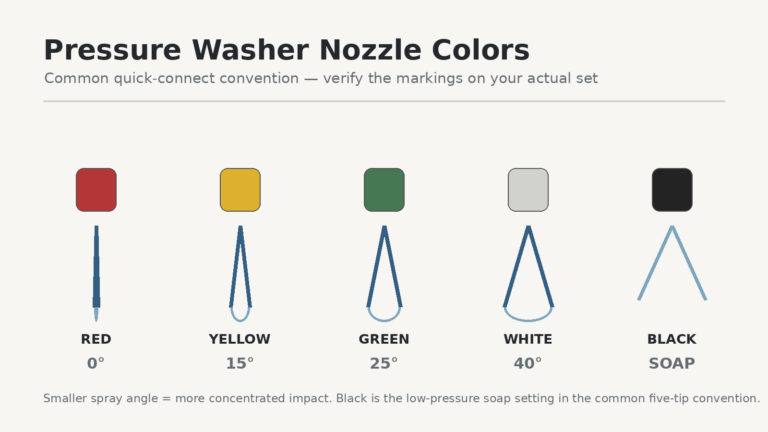
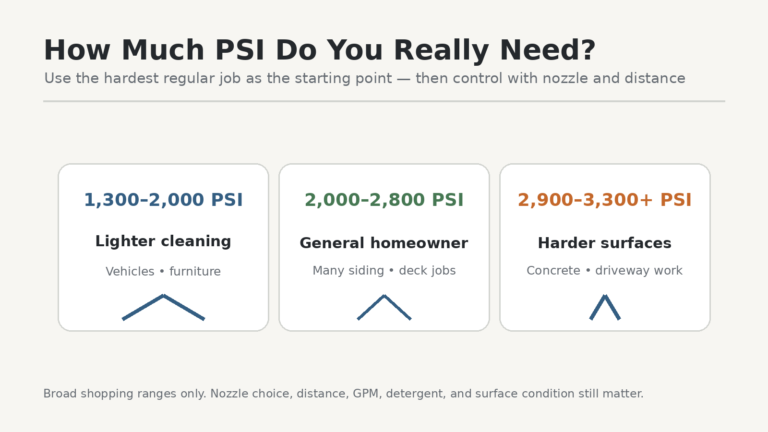
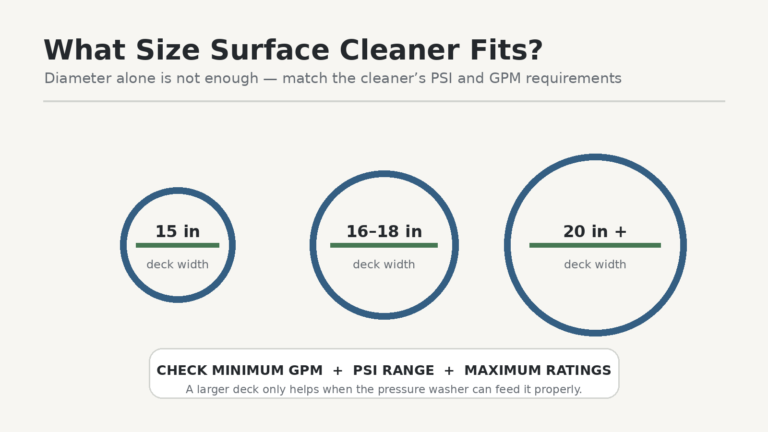
If you are still choosing the machine, start with Electric vs Gas Pressure Washer and PSI vs GPM. For the accessories on the other end of the hose, see Pressure Washer Nozzle Colors and Pressure Washer Surface Cleaner Size.
Bottom Line
Do not buy a pressure-washer hose by length alone.
The useful order is:
fit → pressure rating → temperature rating → diameter/flow compatibility → length → handling quality.
A longer hose can be one of the best convenience upgrades for a pressure washer. The wrong hose can create leaks, awkward adapters, poor handling, or an unsafe mismatch.
Buy the hose that belongs with the system, then choose the length that keeps you from dragging the machine around all day.