What Size Shop Vac Do You Need? 4, 6, 9, 12, or 16 Gallons?
Shop-vac capacity is easy to misunderstand because gallon size looks like a power rating.
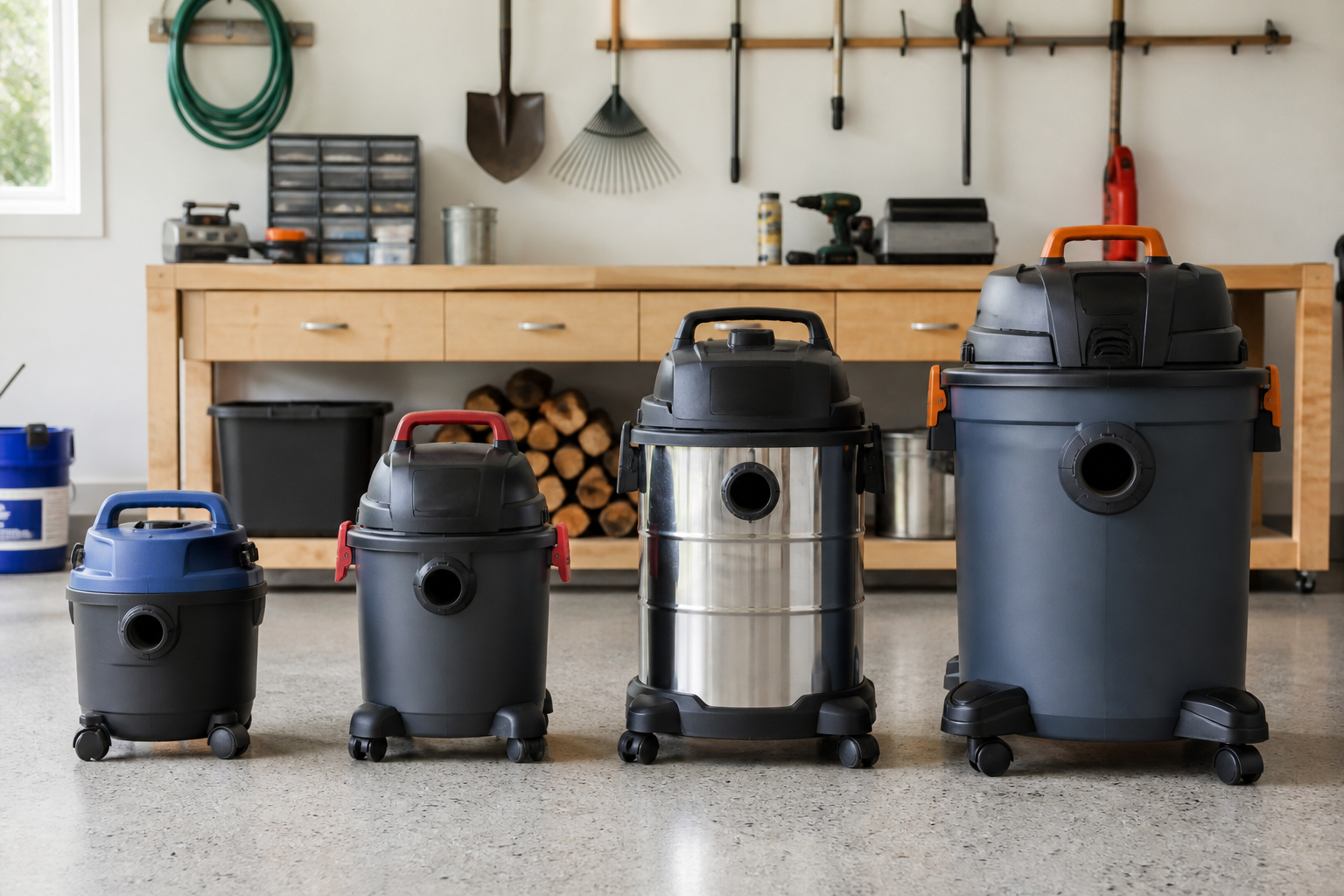
A 16-gallon vacuum is huge compared with a 4-gallon model, so it feels as though the bigger one ought to be four times the machine.
It is not.
The gallon number mostly tells you how much the tank can hold. It does not tell you how much suction the vacuum has.
Shop-Vac’s own product specifications make the same basic point from the other direction: choose a large-capacity vacuum when you have large messes and want to empty it less often; choose a smaller one when storage space is limited.
That sounds almost too obvious, but I think it is a better starting point than “buy the biggest shop vac you can afford.”
The quick answer
For most homeowners, I would think about shop-vac sizes like this:
- 3–4 gallons: cars, small household messes, small work areas, carrying upstairs, limited storage.
- 5–6 gallons: portable general-purpose use, DIY cleanup, moderate garage work.
- 8–10 gallons: a useful middle ground when you want more capacity without a giant machine.
- 12–14 gallons: garages, workshops, renovation cleanup, larger dry messes, more frequent wet pickup.
- 16 gallons and up: big messes, high-volume cleanup, water pickup, and users who are willing to store and move a full-size vac.
Those are not performance classes. They are a practical way to think about capacity and bulk.
Before buying, I would still compare CFM, water lift, hose size, and filtration because two vacuums with the same tank size can have different performance and features.
What does the gallon rating actually mean?
The rating describes the tank’s nominal capacity. It is not a promise that you can vacuum that many gallons of liquid before the machine stops.
Wet/dry vacs normally have an automatic shutoff or float mechanism for wet pickup. The usable liquid capacity can therefore be less than the tank’s headline size. The exact setup depends on the model, so the owner’s manual is the place to check.
The important point for buying is simpler: capacity determines how often you have to stop and empty the machine.
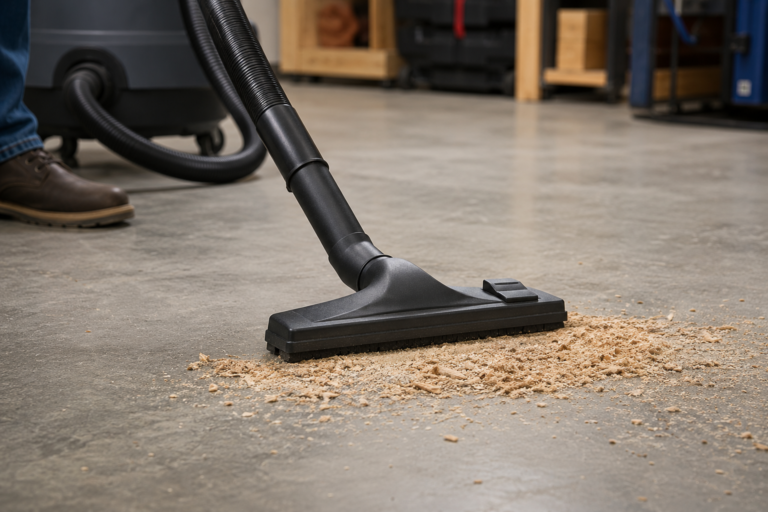
If you are sucking a pile of sawdust from beneath one bench, a 16-gallon tank may accomplish nothing except taking up more room.
If you are cleaning a flooded basement floor, a tiny vacuum may have you making a lot of trips to empty it.
3- to 4-gallon shop vacs: small on purpose
I would look hard at this size if the vacuum’s main jobs are:
- car interiors;
- small spills;
- drilling or small DIY cleanup;
- cleaning stairs or carrying the vacuum between floors;
- working in a cramped garage or apartment;
- quick messes where getting the vacuum out is half the battle.
RIDGID describes one of its 4-gallon portable models as intended for general home cleaning, workspace cleanup, and auto detailing. That is about where I see the class too.
The big advantage is not mysterious. A small vacuum is easier to grab.
The disadvantage is also not mysterious. The tank fills faster, and compact vacs can come with smaller hoses or fewer full-size accessories depending on the model.
For someone who mostly wants to clean cars, I would rather own a good compact vacuum that gets used every week than a giant machine that has to be wrestled around the garage.
5- to 6-gallon shop vacs: a portable all-around size
This range is interesting because it can still be genuinely portable while giving you enough capacity for normal DIY messes.
I would consider it for someone who does a little of everything:
- garage floors;
- small woodworking projects;
- car cleanup;
- minor renovation messes;
- occasional wet pickup.
Six gallons of capacity is not “small” when the thing you are collecting is ordinary dust and debris.
Where it becomes small is when the job itself produces volume. A planer, demolition debris, a large water spill, or repeated whole-shop cleanup can fill a compact tank quickly.
So this is a size I like for general use with portability still near the top of the list.
8- to 10-gallon shop vacs: the middle nobody talks about
There is a tendency to jump from “small portable vac” straight to “12- or 16-gallon shop vac.” I would not automatically skip the middle.
A 9-gallon wet/dry vac, for example, can give you meaningfully more capacity without being as bulky as many 12- to 16-gallon machines.
This is the range I would consider if a 5- or 6-gallon vac seems too small but you know you do not want the largest thing in the aisle.
It makes sense for:
- regular garage cleanup;
- DIY remodeling;
- woodworking where the vacuum is used for cleanup rather than as a large-chip dust collector;
- moderate liquid pickup;
- someone who wants one wet/dry vacuum to cover a lot of jobs.
12- to 14-gallon shop vacs: full-size homeowner territory
Once you get into this range, I stop thinking “portable vacuum” and start thinking “garage or workshop machine that can be moved when necessary.”
That is not a criticism. For a lot of people, this is exactly what they need.
The larger tank is useful when you are cleaning:
- big piles of sawdust and chips;
- renovation debris;
- a garage or basement regularly;
- larger wet messes;
- jobs where stopping to empty the vacuum is getting old.
You also tend to find more models in this class equipped with full-size hoses, drains, cart-style wheels, long cords, and accessory storage. Those are model-specific features, not guarantees that come with the gallon number, but they become more common as the vacuum gets physically larger.
This is probably where I would start if the vacuum is going to live in a garage and rarely needs to go upstairs.
16 gallons and larger: make sure you need the capacity
A 16-gallon shop vac can make sense. I just would not buy one because “16 is better than 12.”
Large-capacity machines earn their keep when you regularly deal with large volumes of material or liquid.
They also come with obvious costs:
- more floor space;
- more awkward transportation;
- a larger machine to maneuver around cars and benches;
- a potentially very heavy tank if you collect a lot of liquid.
A gallon of water weighs a little over eight pounds. You will not necessarily fill a nominal 16-gallon vac with 16 gallons of liquid, but you do not need to get anywhere close to that before “I will just pick this up” stops sounding like a good plan.
If wet pickup is a major reason you want a large vacuum, I would specifically look for a convenient tank drain.
Does a bigger shop vac have more suction?
Not because of the tank.
A manufacturer may put a stronger motor and larger hose on a larger model, so a big vacuum can absolutely outperform a small one. But that is a design choice, not something the gallons themselves cause.
Compare the actual specifications.
I would rather buy a smaller machine with the airflow, suction, hose, and filters I need than a larger tank attached to specifications I do not.
If you are seeing 4.5 HP, 5 HP, and 6.5 HP numbers and trying to make sense of those too, read Peak HP Is Not What Makes a Shop Vac Suck Better.
Hose size can change the answer
Tank size is only one physical dimension that matters.
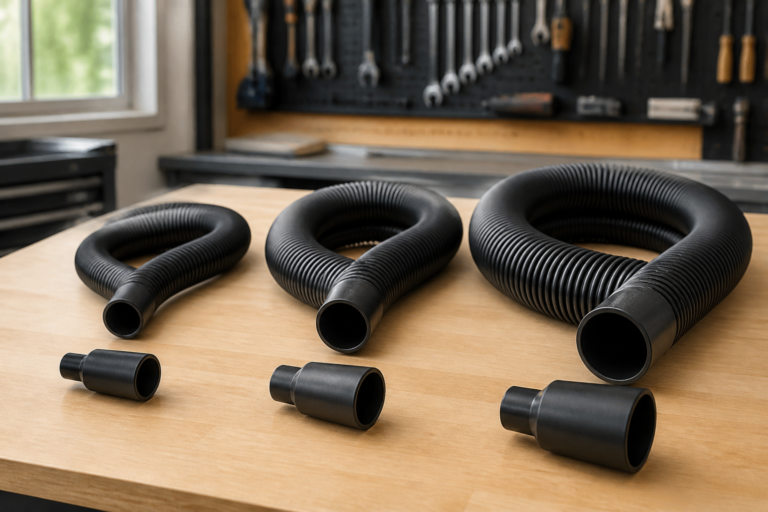
A compact vac with a small flexible hose can be excellent inside a car. A larger machine with a 2-1/2-inch hose can make much more sense when you are trying to move chunks of renovation debris.
That is why I would check the included hose before deciding two machines are equivalent.
See Shop Vac Hose Size Explained for the 1-1/4, 1-7/8, and 2-1/2-inch tradeoffs.
What about woodworking?
This depends on what you mean by “woodworking.”
If you mean cleaning sawdust from the floor, a normal wet/dry vac can be very useful.
If you mean connecting directly to sanders and saws all day, you start caring more about fine-dust filtration, tool activation, filter cleaning, adapters, and sustained extraction.
If you mean collecting the chips from a planer or a large cabinet saw, you may be moving into a different class of dust-collection equipment entirely.
Tank capacity alone does not answer any of those questions.
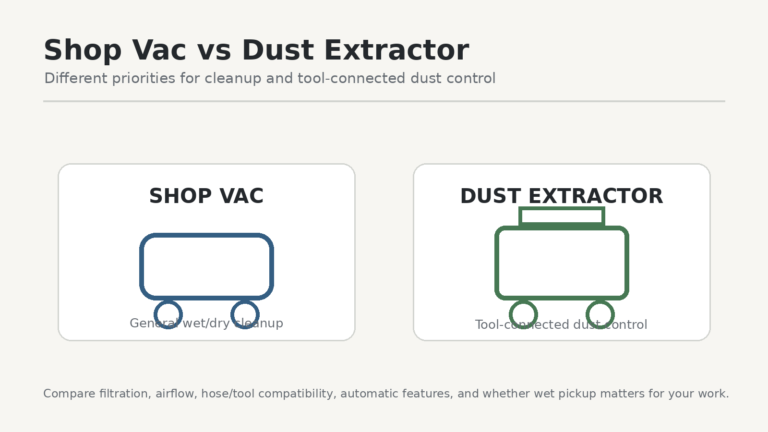
I explain the first split in Shop Vac vs Dust Extractor.
What size would I buy for a normal garage?
If someone told me, “I want one shop vac for my house and garage, I clean the cars, do normal DIY projects, and occasionally have a bigger mess,” I would probably start shopping in roughly the 6- to 12-gallon range.
Then I would let the details decide.
If carrying and storage matter a lot, I would move smaller.
If renovation messes and wet pickup matter more, I would move larger.
If the vacuum will stay permanently in a workshop, portability drops down the list.
If it has to go up basement stairs, portability moves right back up.
The easiest way to choose
Do not ask, “What is the best shop-vac size?”
Ask these instead:
- Where will I store it?
- How often will I carry it?
- What is the largest mess I deal with regularly?
- Will I pick up much liquid?
- What hose diameter do I want?
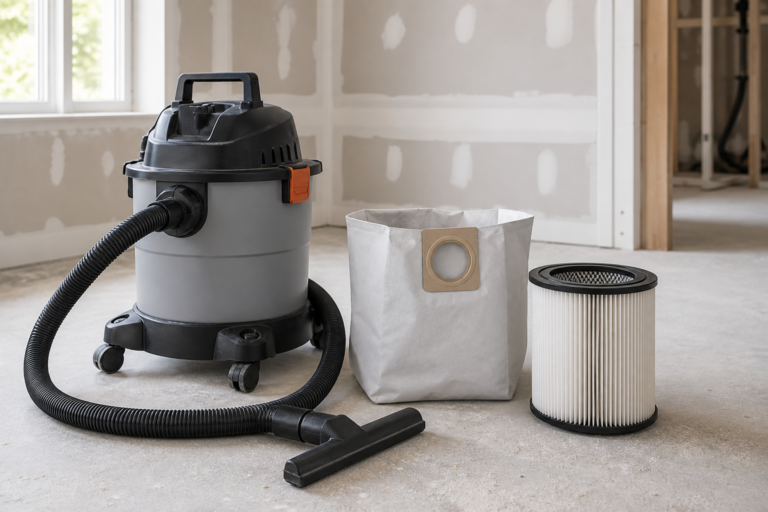
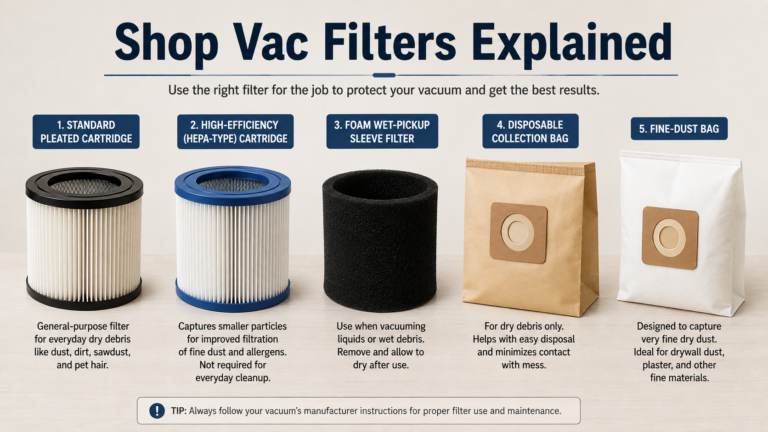
- What filters and bags are available?
- What do the airflow and suction specifications say?
If two models can do the same jobs, I would take the one that is less annoying to own.
There is no prize for having the largest shop vac in the neighborhood.