Air Compressor Duty Cycle Explained: What the Percentage Actually Means
Duty cycle tells you how much of a cycle an air compressor is designed to run. Learn why it matters for sanding, spraying, inflating, nailers, and continuous air demand.
Practical buying guides for garage and workshop gear, including shop vacs, ladders, lighting, tool storage, air compressors, and homeowner basics.
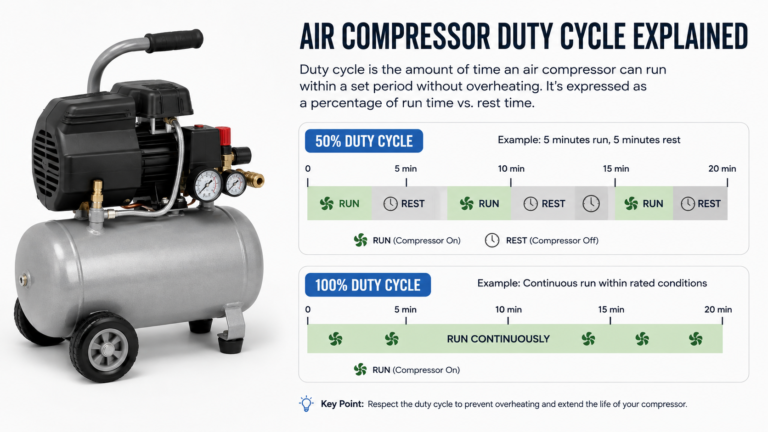
Duty cycle tells you how much of a cycle an air compressor is designed to run. Learn why it matters for sanding, spraying, inflating, nailers, and continuous air demand.

Wall studs are often 16 inches on center, but 24-inch spacing is also used. Learn what on-center means, where spacing changes, and why you should verify before mounting anything heavy.

The right shop-vac filter depends on what you are picking up. Compare cartridge filters, HEPA filters, foam sleeves, collection bags, and fine-dust bags.
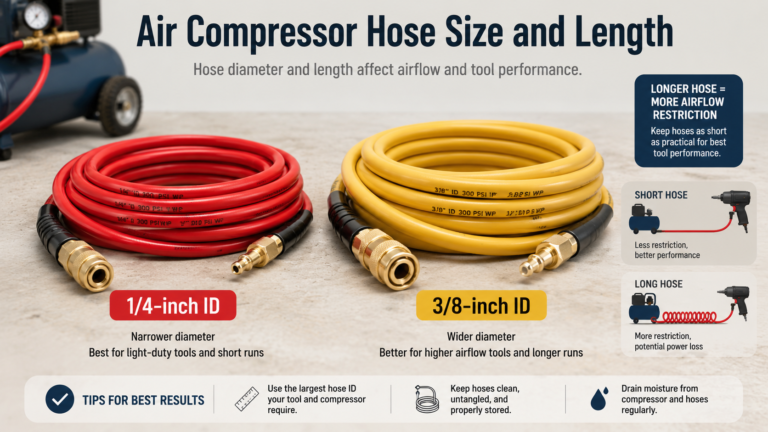
Air hose diameter, length, fittings, and flow all affect pressure drop. Learn when 1/4-inch hose is convenient, when 3/8-inch makes sense, and why longer runs need more attention.
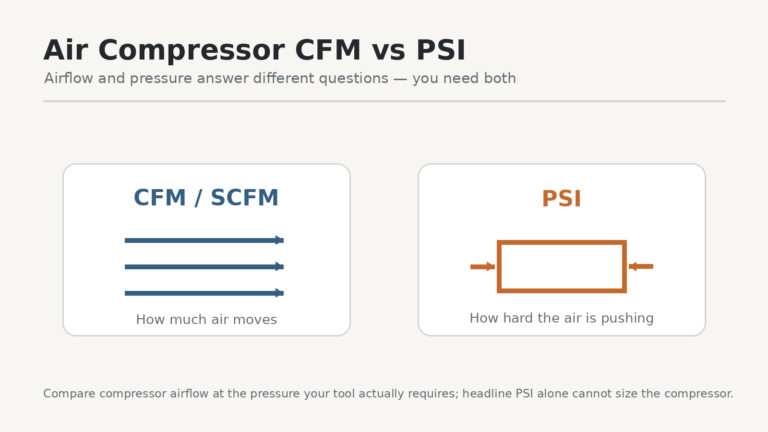
Air compressor shopping gets confusing because the biggest number on the tank is usually PSI, while the number that decides whether an air tool keeps working is often CFM. Then there are gallons, horsepower, SCFM, duty cycle, decibels, oil-free pumps, and “maximum” ratings. A compressor can look powerful on the box and still be a…
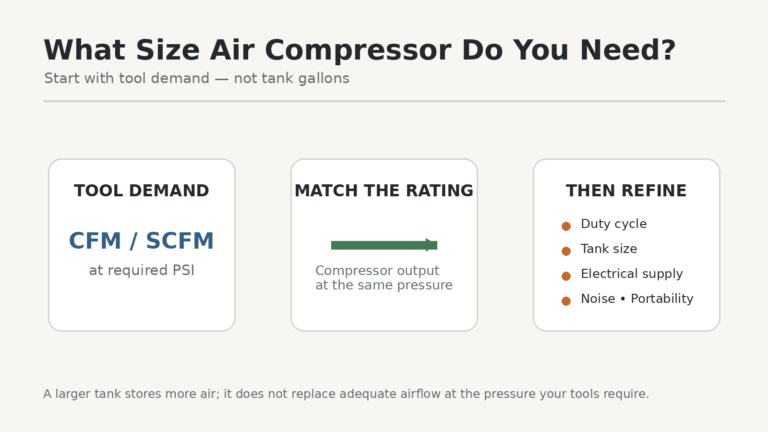
Size an air compressor by the tools you actually run: required CFM or SCFM at the required PSI, simultaneous use, duty cycle, tank storage, and electrical supply.
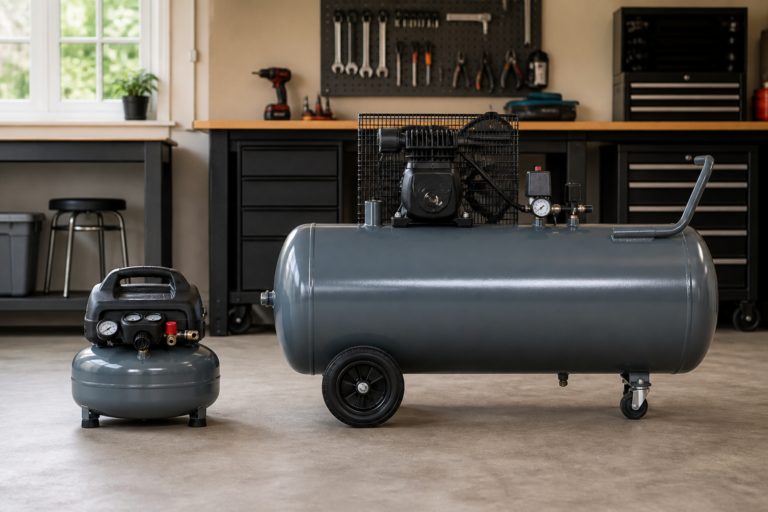
Air-compressor tank gallons tell you stored-air capacity, not pump output. Learn what bigger tanks change, what they cannot fix, and how storage affects cycling and recovery.
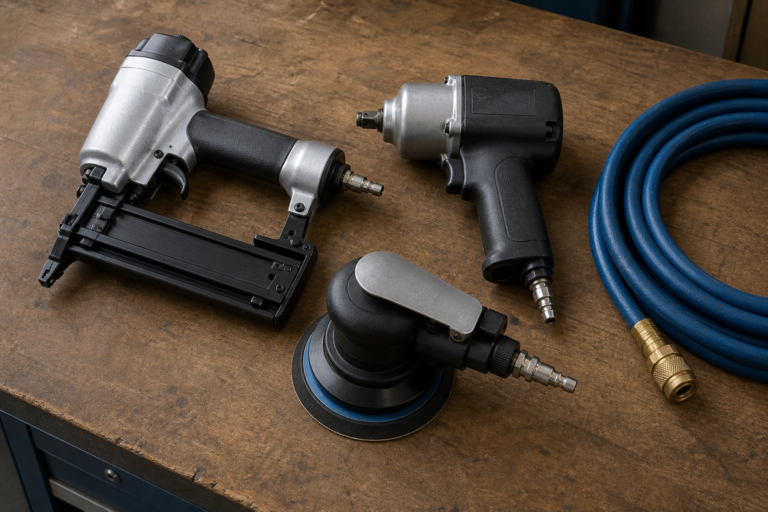
Air-tool CFM requirements vary by exact tool and usage. Use manufacturer airflow and PSI values, understand average versus loaded consumption, and size the compressor from real demand.
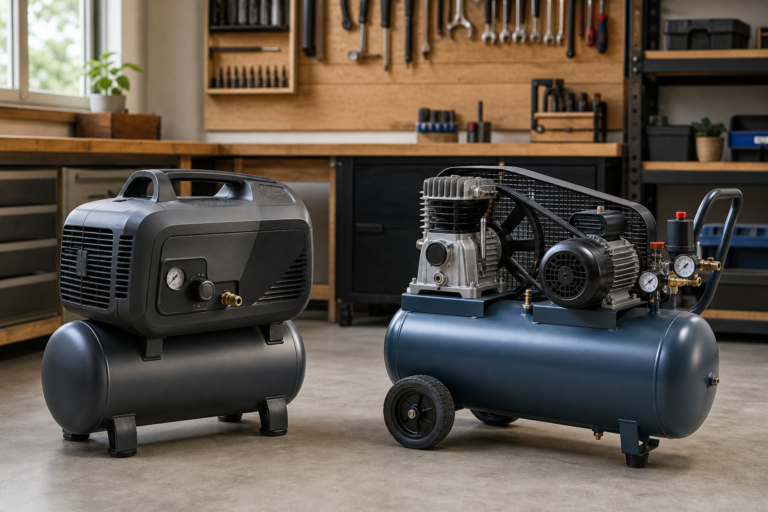
Oil-free compressors simplify pump maintenance; oil-lubricated models add oil service but are common in heavier-duty machines. Compare the real tradeoffs before buying.

Learn why plaster, wood or metal lath, tile assemblies, and thick walls confuse stud finders—and how to choose and verify a better detection method.