Shop Vac Hose Size Explained: 1-1/4 vs 1-7/8 vs 2-1/2 Inch
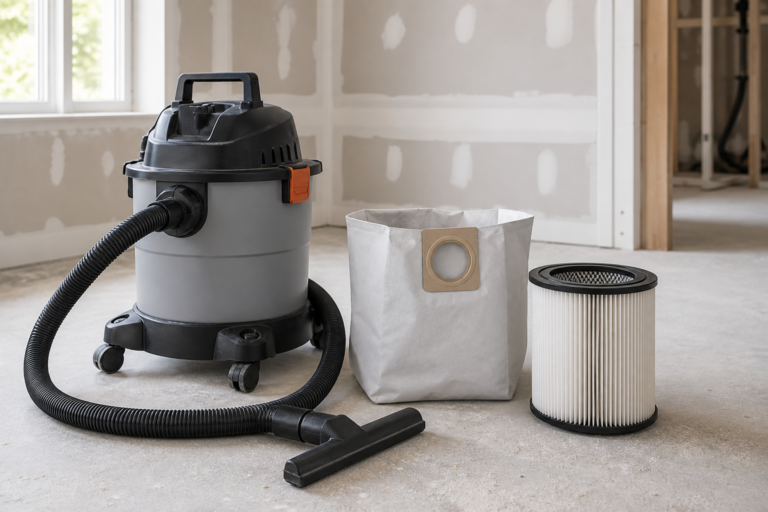
A shop-vac hose is one of those things that seems like it should be standardized.
Then you try to attach a nozzle from one vacuum to another and discover that apparently we needed several different diameters, several different cuffs, and enough adapters to start a small plumbing department.
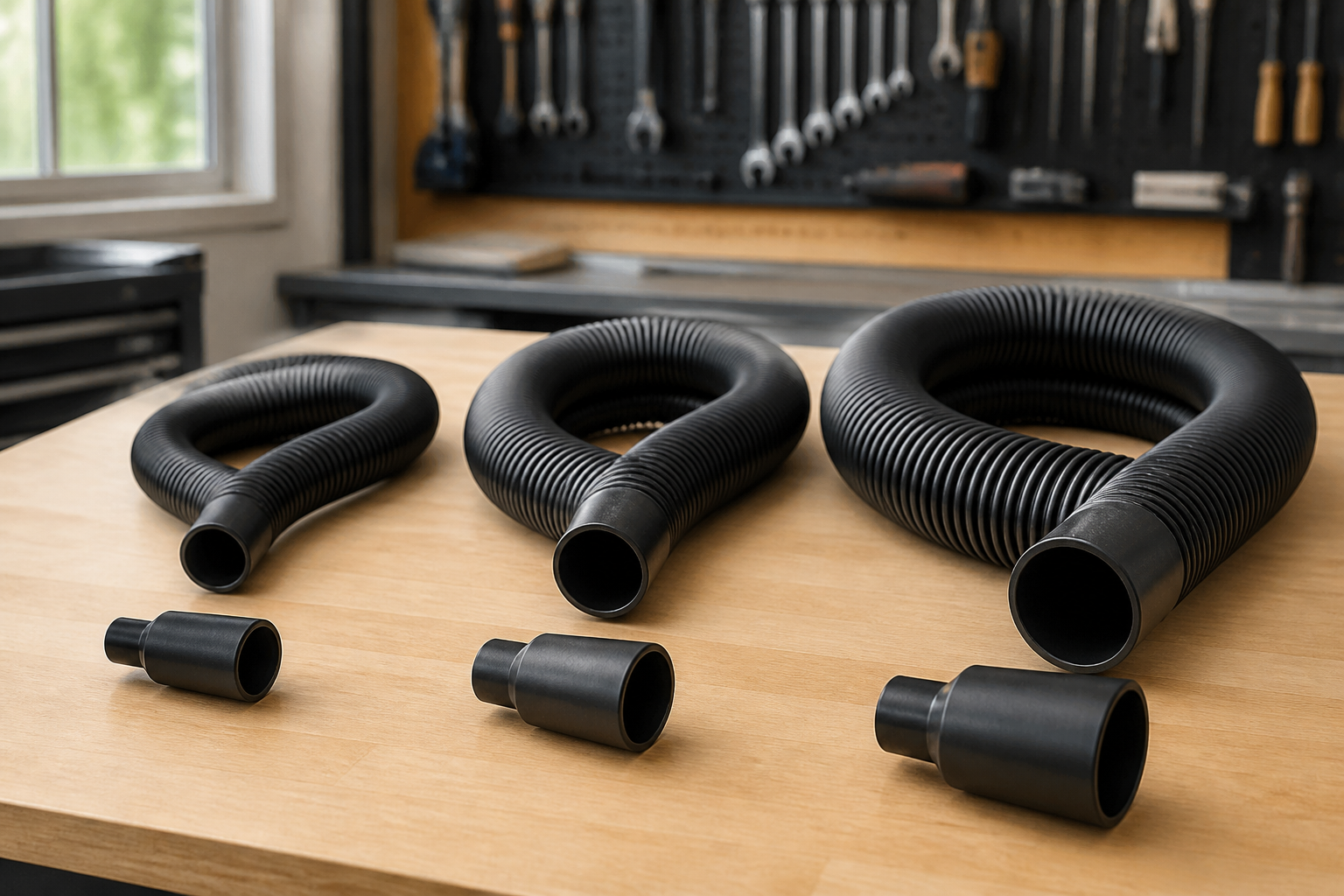
The three sizes you are most likely to run into on homeowner wet/dry vacuums are 1-1/4 inch, 1-7/8 inch, and 2-1/2 inch. There are other sizes, and manufacturers do not all use exactly the same fittings, but those three cover a lot of the market.
The basic tradeoff is straightforward:
Smaller hoses are easier to handle. Larger hoses give larger debris more room to get through.
That does not mean the largest hose is always best.
The quick comparison
| Hose size | Where it makes sense | Main advantage | Main drawback |
|---|---|---|---|
| 1-1/4 in. | Cars, small cleanup, tight spaces, smaller tools | Light and flexible | Less room for bulky debris |
| 1-7/8 in. | General homeowner and garage use | Good compromise | Not as nimble as small hose or as open as 2-1/2 |
| 2-1/2 in. | Workshops, renovation debris, larger pickup | Room for larger debris | Bulkier hose and attachments |
I would choose the hose based on the job, then make sure the vacuum itself has the airflow, suction, filtration, and capacity to match. Hose diameter cannot rescue a vacuum that is wrong for the job in every other way.
1-1/4-inch hose: small can be useful
A 1-1/4-inch hose makes sense when control matters more than swallowing big chunks.
I would like it for:
- car seats and footwells;
- crevice tools;
- small bench cleanup;
- craft or hobby debris;
- reaching around appliances;
- smaller dust ports when a compatible adapter is available.
Shop-Vac sells 1-1/4-inch car-cleaning and micro-cleaning accessories, which tells you a lot about where this size fits.
The hose and attachments are easier to move around in tight spaces. If I am trying to get between a car seat and center console, that matters more to me than whether the hose can swallow a two-inch chunk of wood.
The downside is just geometry. A smaller opening gives bulky debris less room.
If your shop floor regularly has wood chips, screws, chunks of drywall, and leaves on it, you may spend more time finding the thing that wedged itself in the hose.
1-7/8-inch hose: the compromise size
For a general homeowner shop vac, 1-7/8 inch makes a lot of sense.
RIDGID uses 1-7/8-inch hoses on multiple machines and sells a broad range of accessories in that size. It is large enough for ordinary garage debris but still reasonably manageable.
I would consider it a strong choice for:
- normal garage cleanup;
- DIY projects;
- cars when you do not mind a somewhat larger hose;
- sawdust and common workshop debris;
- one vacuum expected to do several different jobs.
If you have no strong reason to go small or large, the middle size is not a bad place to land.
2-1/2-inch hose: give the debris some room
The 2-1/2-inch hose starts to make sense when the stuff you are picking up is physically larger.
RIDGID markets 2-1/2-inch hose and accessories for larger pickups and general shop/jobsite cleanup. The advantage is easy to understand: a large object that cannot physically fit through a 1-1/4-inch hose has a much better chance with a 2-1/2-inch path.
I would look at this size for:
- wood chips and shavings;
- larger renovation debris;
- garage-floor cleanup;
- leaves and bulky light material;
- full-size wet/dry vacs that rarely need to squeeze into tiny spaces.
But I would not choose it automatically for a sander just because 2-1/2 is the biggest number. Many handheld power tools have much smaller dust ports, so you will be reducing the connection anyway.
Does a bigger hose always mean more suction?
No. This is where the word “suction” gets us into trouble again.
The hose is part of the airflow system. Diameter, length, bends, surface, fittings, and attachments all affect resistance. The vacuum’s motor and fan design matter too.
You cannot look at hose diameter alone and announce which complete system will pull harder.
What you can say is that a larger hose gives larger debris a larger path and can reduce some restrictions, while a smaller hose can produce higher air velocity in the narrower passage under a given set of conditions.
In actual buying, I would avoid trying to calculate the entire fluid-dynamics problem in the hardware aisle.
Buy the hose that fits the debris and the work, then compare the manufacturer’s actual CFM and water-lift specifications.
Length matters too
Everyone wants more reach until they have to store twenty feet of hose.
A longer hose can be very convenient. It lets the vacuum stay in one place while you work farther away, and it can keep a noisy machine out of the immediate work area.
But longer hose also adds resistance, takes up storage space, and gives debris more hose to travel through.
RIDGID sells a 14-foot 1-7/8-inch hose specifically as a longer-reach option. That is useful, but I would still ask whether I need fourteen feet every time I use the vacuum.
Sometimes a longer electrical cord plus a normal hose is the less annoying setup.
Adapters: useful, but they do not repeal physics
Adapters are the reason you can often make a vacuum and tool work together even when they were not born into the same hose family.
Shop-Vac and RIDGID both sell hose adapters and connectors for different sizes.
That is good news if:
- your sander has a small port;
- you have old accessories you want to keep;
- your vacuum inlet and preferred hose do not match;
- you occasionally want a detail hose on a full-size machine.
But reducing a 2-1/2-inch system down to a tiny power-tool port creates a restriction. The adapter makes the pieces connect; it does not make the small opening disappear.
Measure before buying accessories
This is the part that can save you a return trip.
Do not assume that “1-7/8 inch” printed somewhere in a listing means every 1-7/8-inch accessory from every brand snaps directly onto every other 1-7/8-inch hose.
Manufacturers use different locking tabs, cuffs, tapers, and connection systems.
Shop-Vac’s own guidance tells owners to determine the diameter of the hose before choosing accessories and notes that adapters are available for different sizes.
I would check the vacuum’s manual or accessory compatibility list before buying a pile of attachments.
What hose size for cleaning a car?
I lean smaller.
A 1-1/4-inch hose with good crevice and brush attachments is easy to maneuver around seats, under pedals, and along trim.
A 1-7/8-inch hose is still very workable and may be the better choice if the same machine also handles the garage.
A 2-1/2-inch hose can clean a car, of course. It is just more hose than I want to fight in a footwell unless the vacuum offers a smaller detail hose or car kit.
What hose size for woodworking?
This depends on the woodworking tool.
For cleaning the floor and bench, larger hose is useful because it can handle chips and shavings.
For a random-orbit sander, the dust port may be far smaller and the job is dominated by fine dust rather than giant debris.
For a planer or large stationary machine, a shop vac may not be the right dust-collection device in the first place.
This is exactly why I would separate “what hose fits?” from “what dust system do I need?”
If you are connecting directly to tools regularly, read Shop Vac vs Dust Extractor.
What hose size for renovation debris?
Here I would rather have the larger opening.
Renovation cleanup has a talent for producing objects that are just large enough to jam a small hose: chunks of joint compound, wood splinters, insulation scraps, fasteners, and assorted things nobody remembers dropping.
A 2-1/2-inch hose gives that debris more room.
For fine drywall sanding dust, however, hose diameter is only part of the issue. Filtration and dust containment matter much more. See Can You Use a Shop Vac for Drywall Dust?.
How hose size fits with tank size
Do not assume a certain gallon capacity guarantees a certain hose diameter.
Manufacturers mix and match designs. You can find relatively compact vacuums with useful performance and larger machines with different hose systems.
So when you are deciding what size shop vac to buy, look at the hose as its own specification.
What I would buy
If I wanted a shop vac mostly for a car, I would favor 1-1/4 or a good detail-hose system.
If I wanted one vacuum to do normal homeowner jobs, I would be very comfortable with 1-7/8.
If I expected wood chips, renovation debris, and bigger cleanup, I would look hard at 2-1/2.
And if a particular vacuum otherwise looked perfect, I would check the available adapters before rejecting it over hose size alone.
The hose is important. It is just not important enough to buy the wrong vacuum around it.