Cordless Tool Battery Voltage vs Amp-Hours: What Actually Matters?
Battery Watt-Hour Comparator
Compare battery energy capacity using nominal voltage × amp-hours = watt-hours.
This is an energy-capacity comparison, not a promise of runtime, power, or compatibility. Always follow the battery and tool manufacturers’ compatibility guidance.
Cordless tool batteries are covered in numbers: 12V, 18V, 20V MAX, 2.0Ah, 5.0Ah, 8.0Ah, and sometimes watt-hours. Those numbers look like a simple ranking system. They are not.
Voltage, amp-hours, and watt-hours describe different things. A larger number may mean more stored energy, a different tool platform, more weight, or a pack designed to supply higher current. It does not automatically mean that every tool will feel stronger.
This guide explains what the battery specifications mean and how to choose a useful battery without paying for capacity you will not use.
Quick Answer
Voltage identifies the electrical platform, and the battery must be compatible with the tool. Amp-hours mainly help compare capacity and expected runtime within the same voltage platform. Watt-hours combine voltage and amp-hours into a better measure of rated energy capacity.
For ordinary homeowner jobs, a smaller pack is lighter and often easier to handle. A larger pack makes sense when runtime matters, the tool draws heavily, or stopping to recharge would be frustrating.
Do not buy a battery by one number. Check compatibility, physical size, weight, charger support, warranty, and whether the pack is designed for the tool’s power demand.
What Battery Voltage Means
Voltage is part of the system the battery and tool were designed around. A 12-volt-class battery belongs with compatible 12-volt tools. An 18- or 20-volt-class pack belongs with its own compatible platform.
Higher-voltage platforms can support demanding tools, but voltage alone does not rank every drill, saw, or blower. Motor design, controls, gearing, battery output, and the tool’s intended job all affect performance.
18V vs 20V MAX
Some labels use maximum voltage while others emphasize nominal operating voltage. DeWalt states that its 20V MAX batteries measure 20 volts initially without a workload and have a nominal voltage of 18 volts.
That does not make every 18V and 20V MAX system identical, but it shows why the front label is not enough for a cross-brand performance comparison. See DeWalt’s official cordless-platform explanation, then read 18V vs 20V MAX Tools: What the Voltage Labels Really Mean for the focused comparison.
What Amp-Hours Mean
Amp-hours, abbreviated Ah, are a capacity rating. Within the same voltage platform, a higher-Ah battery generally stores more energy and can provide more runtime than a lower-Ah battery used for the same work.
Milwaukee describes amp-hours as its battery runtime measure and explains that a larger Ah number generally means longer runtime within its M18 system. That is a useful shortcut only within a compatible platform. See Milwaukee’s battery-selection guide.
A 5Ah pack does not guarantee exactly five hours of tool use. Runtime depends on the tool, load, speed, material, temperature, pack condition, and how often the trigger is held.
Watt-Hours Make Cross-Voltage Capacity Easier to Compare
Watt-hours, abbreviated Wh, are calculated from nominal voltage multiplied by amp-hours. The Federal Aviation Administration uses the same formula for lithium batteries:
Volts × amp-hours = watt-hours
| Nominal voltage | Capacity | Approximate stored energy |
|---|---|---|
| 12V | 2Ah | 24Wh |
| 12V | 5Ah | 60Wh |
| 18V | 2Ah | 36Wh |
| 18V | 5Ah | 90Wh |
| 18V | 8Ah | 144Wh |
These are mathematical examples, not runtime promises. The FAA explains the formula in its power-tool battery guidance.
Why Ah Alone Can Mislead Across Platforms
A 5Ah battery at 12 nominal volts stores about 60Wh. A 5Ah battery at 18 nominal volts stores about 90Wh. Both say 5Ah, but they do not contain the same rated energy.
Watt-hours are better for comparing energy capacity across voltages. They still do not tell you whether batteries fit the same tool or how efficiently different tools use that energy.
Does a Higher-Ah Battery Make a Tool More Powerful?
Not automatically.
Amp-hours describe capacity, not a universal power-output rating. Some larger or newer packs can supply higher current because of their cells, internal connections, cooling, and electronics. In those cases, a demanding tool may perform better. The improvement comes from the pack’s output design, not simply because the Ah number is larger.
Milwaukee’s specifications show the distinction: its M18 FORGE 8Ah pack is advertised as delivering the same power level as the company’s HIGH OUTPUT 12Ah pack. Capacity and available power are related engineering decisions, but they are not the same specification.
If a manufacturer advertises “more power,” check what pack and tool were used for the comparison. The claim may apply only to certain high-draw tools.
Is a Higher-Ah Battery Safe to Use on a Compatible Tool?
Usually, yes—but only when the tool manufacturer lists that battery family and pack as compatible. Higher capacity does not mean the pack forces extra current into the tool. Compatibility, protection electronics, and the manufacturer’s limits still control the decision.
The practical drawbacks are size, weight, balance, and price. A large battery on a compact drill or impact driver can make overhead work less comfortable. A smaller battery on a blower or circular saw may require frequent swaps.
Compatibility is the key word. Matching voltage printed on two different brands does not make their batteries interchangeable. Slide rails, terminals, communication, protection electronics, and chargers differ.
What Battery Size Fits Common Homeowner Jobs?
| Typical use | What usually matters most | Practical battery approach |
|---|---|---|
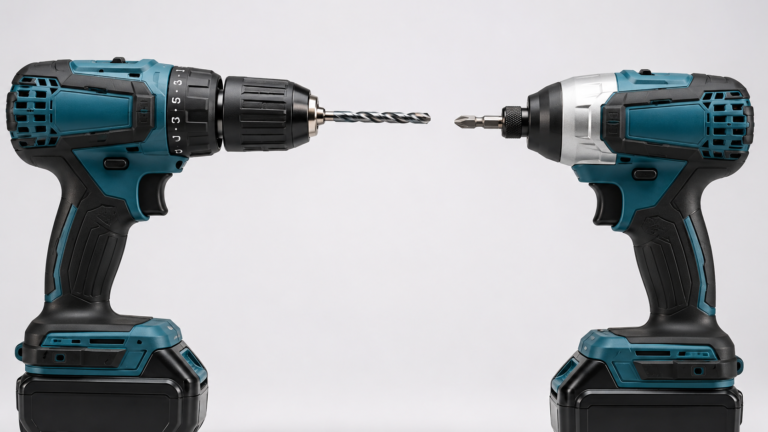
| Hanging shelves, assembling furniture, light drilling | Low weight and balance | A compact lower-Ah pack is often enough |
| Repeated drilling, impact driving, DIY projects | Balance of runtime and weight | A mid-capacity pack is a useful general choice |
| Circular saw, grinder, reciprocating saw | Output capability and runtime | Use a pack the manufacturer recommends for high-draw tools |
| Blower, string trimmer, vacuum | Continuous runtime | More watt-hours can reduce battery changes |
| Occasional emergency or spare use | Cost and storage | Two modest packs may be more flexible than one very large pack |
The table is a buying framework, not a claim that one capacity fits every brand. Tool demand varies widely.
One Large Battery or Two Smaller Batteries?
Two smaller packs can keep a project moving while one charges. They also keep hand tools lighter and give you a spare if one pack is depleted.
One larger pack can be better for a blower, vacuum, mower, or saw where interruptions are annoying.
Compare total watt-hours, not just the number of batteries. Two 18V 2Ah packs provide about 72Wh combined. One 18V 5Ah pack provides about 90Wh, although you cannot use both smaller packs at once unless the tool is designed for multiple batteries.
Charging Time Is a Pack-and-Charger Question
A larger battery usually takes longer to charge on the same charger, but charger output and battery cooling can change the result. A high-rate charger may refill a compatible large pack faster than a basic charger refills a smaller one.
Check the manufacturer’s charging table for the exact pack and charger. “Fast charger” is not a useful comparison without an actual time and compatibility list.
Battery Platform Matters More Than a Small Price Difference
The first cordless tool is often a battery-platform decision. Once you own suitable batteries and a charger, later compatible tools may be available without buying another kit.
Before committing, look at the tools you may realistically buy: drill, impact driver, saw, blower, trimmer, light, vacuum, or inflator. Do not pay for a huge catalog if the platform lacks the two tools you actually want.
Cordless vs Corded Is Still a Buying Decision
Cordless convenience is valuable when outlets are distant or the job moves around. Corded tools avoid battery aging and runtime limits and may make sense for stationary or infrequent high-draw work.
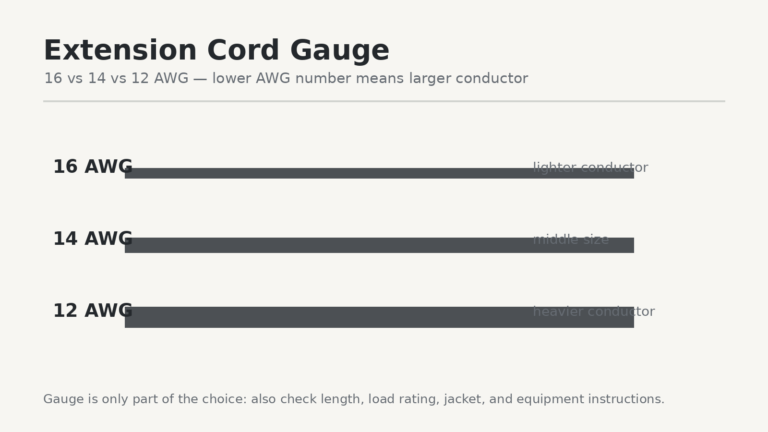
If a corded tool is the better fit, cord gauge and distance become part of the purchase. See Extension Cord Gauge Explained: 16 vs 14 vs 12 AWG for Homeowners.
For more battery-platform and tool-system guidance, see the Cordless Tool Buying Guides.
Common Battery Buying Mistakes
Buying the Largest Pack for Every Tool
More runtime is useful until the tool becomes tiring and awkward. Match the pack to the job rather than treating size as a score.
Comparing Ah Across Different Voltages
Amp-hours are easiest to compare within one platform. Use watt-hours when comparing stored energy across voltages.
Assuming Higher Ah Always Means More Power
Check the manufacturer’s output claims and compatible-tool guidance. Capacity alone does not specify maximum output.
Ignoring the Charger
A good battery with a slow or incompatible charger can leave you waiting. Include charging time and charger support in the comparison.
Buying Into a Platform for One Discounted Kit
A cheap starter kit is not a bargain if the next tools you need are unavailable, overpriced, or require a different battery family.
Buying Checklist
- Confirm exact battery and charger compatibility.
- Choose voltage based on the tool platform, not the largest label.
- Compare Ah for runtime within the same platform.
- Use Wh when comparing energy across voltages.
- Check weight and balance on handheld tools.
- Look for manufacturer guidance on high-output packs.
- Compare charging time using the exact charger.
- Consider the tools you may add later.
Bottom Line
Voltage tells you the platform. Amp-hours help describe capacity. Watt-hours let you compare stored energy more fairly across voltages.
A large pack is not automatically the best pack. Compact batteries make hand tools easier to carry. Larger packs reduce interruptions on high-draw or continuous-use equipment. Some packs also deliver more power, but that must be supported by the manufacturer’s design and claims rather than inferred from Ah alone.
Buy the battery that fits the tool, the job, and the platform you intend to keep.