Electric vs Gas Pressure Washer: Which One Should Homeowners Buy?
Choosing between an electric vs gas pressure washer can be confusing because both can look like they do the same job. They spray water under pressure. They clean siding, patios, cars, decks, walkways, and outdoor furniture.
But they are not the same tool.
For most homeowners, the better choice depends less on “which one is stronger” and more on what you plan to clean, how often you will use it, how much maintenance you are willing to deal with, and whether convenience matters more than raw power.
This guide will help you decide which type makes more sense before you spend money.
Quick Answer
For most homeowners, an electric pressure washer is the better first choice. It is easier to store, easier to start, quieter, lighter, and usually enough for cars, patio furniture, light siding cleanup, garbage cans, small patios, and occasional homeowner use.
A gas pressure washer makes more sense if you regularly clean large driveways, concrete, brick, farm equipment, heavy buildup, or large outdoor surfaces where more cleaning power and mobility matter.
The simple version:
Electric is better for convenience.
Gas is better for bigger, dirtier jobs.
Neither one is automatically “best.” The right choice depends on the job.
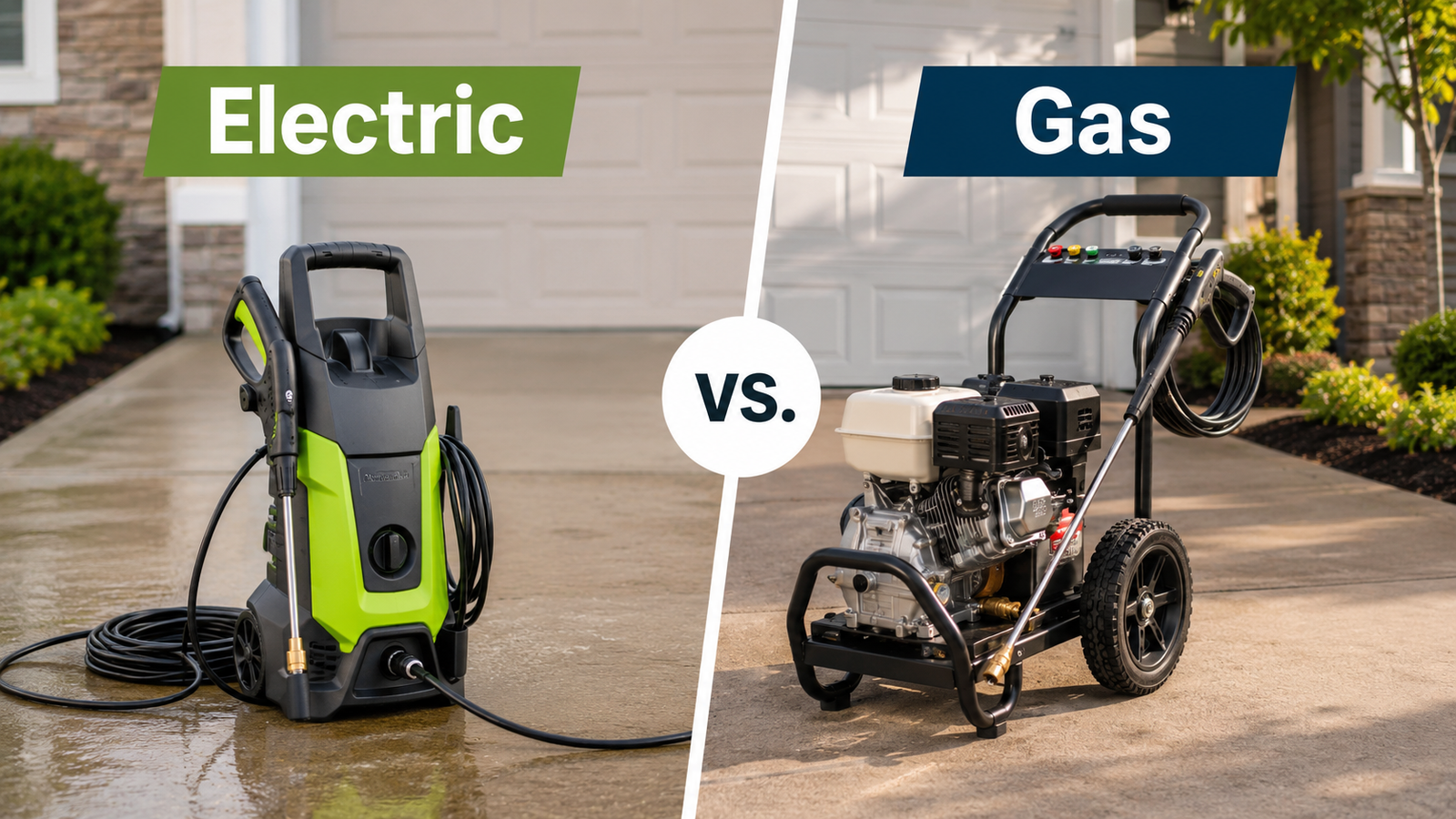
Electric vs Gas Pressure Washer: The Basic Difference
An electric pressure washer uses an electric motor to power the pump. You plug it into an outlet, connect the hose, turn it on, and start cleaning.
A gas pressure washer uses a gasoline engine to power the pump. It works more like a lawn mower: it needs fuel, oil, engine maintenance, and safe outdoor operation.
That difference affects almost everything else.
Electric models are usually easier to live with. Gas models are usually more capable when the job gets heavier. Simpson’s manufacturer FAQ similarly recommends choosing between gas and electric based on job size and frequency of use.
#ad
Use the decision above first, then browse the machine type that fits your situation:
When an Electric Pressure Washer Makes More Sense
An electric pressure washer is usually the smarter choice if you want something simple and manageable.
That matters more than people think.
A pressure washer that is easy to use is a pressure washer you are more likely to actually pull out of the garage.
Electric Is Usually Better for Light and Medium Homeowner Jobs
Electric pressure washers are commonly used for:
Patio furniture
Cars and trucks
Trash cans
Small patios
Light mildew on siding
Outdoor rugs
Walkways
Garden tools
Vinyl fencing
Small decks, depending on the surface and pressure used
For these jobs, you usually do not need the most powerful machine you can buy. In fact, too much pressure can be a problem.
A car, for example, does not need brutal pressure. It needs the right nozzle, a safe distance, and enough flow to rinse soap and loosen grime without damaging paint, trim, or seals.
This is where an electric pressure washer can be a good fit.
Electric Pressure Washers Are Easier to Store
Electric pressure washers are often smaller and lighter than gas models. That makes them easier to move around, store on a garage shelf, or roll out for a quick job.
If you already know you hate dragging heavy equipment around, do not ignore that.
A tool that is technically more powerful but annoying to use may end up sitting in the corner collecting dust.
Electric Is Quieter and More Neighbor-Friendly
Electric models are not silent, but they are usually much quieter than gas pressure washers.
That matters if you live in a neighborhood where houses are close together, or if you prefer to work early in the morning or later in the day.
A gas pressure washer sounds like outdoor power equipment because that is exactly what it is.
Electric Has Less Maintenance
Electric pressure washers do not need gasoline, oil changes, spark plugs, fuel stabilizer, carburetor cleaning, or winter engine storage.
You still need to take care of the pump, hose, nozzles, and connections, but the engine-related maintenance is gone.
That is a big deal for occasional users.
If you only use a pressure washer a few times a year, electric may be less frustrating over the long run.
When a Gas Pressure Washer Makes More Sense
A gas pressure washer starts to make more sense when the jobs get bigger, dirtier, or farther from an outlet.
Gas Is Usually Better for Large Concrete Jobs
If your main goal is cleaning a large driveway, long sidewalk, stained patio, or heavy concrete buildup, gas is often the better choice.
Concrete cleaning usually benefits from both pressure and water flow. A stronger machine can clean faster, especially when paired with the right surface cleaner.
That does not mean every homeowner needs gas. It means that if concrete is the main job, you should think carefully before buying a small electric model and expecting miracles.
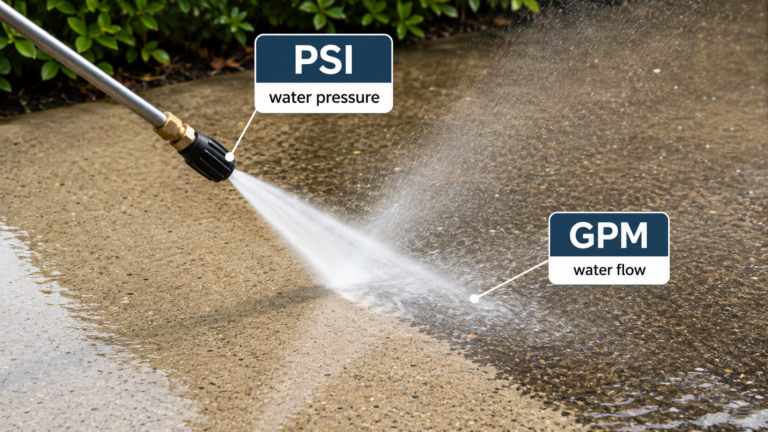
For a deeper explanation of pressure and water flow, read: PSI vs GPM: What Matters More in a Pressure Washer?
Gas Gives You More Mobility
Gas pressure washers do not need to be plugged into an outlet. As long as you have water and fuel, you can work farther from the house.
That can matter for:
Long driveways
Detached garages
Barns or sheds
Large patios
Fences
Equipment cleaning
Remote outdoor areas
Electric models are limited by cord safety, outlet location, and the manufacturer’s instructions. You should not casually throw a long indoor extension cord into the mix and hope for the best.
Gas Can Save Time on Bigger Jobs
A gas pressure washer may not just clean “harder.” It may clean faster.
That matters if you have a big driveway or a lot of surface area. Saving a few minutes on a small patio is not a big deal. Saving an hour on a large job might be.
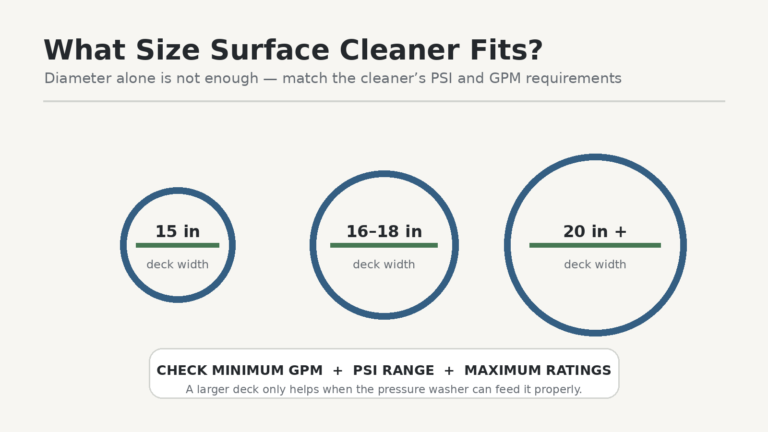
This is also where a surface cleaner can matter. A surface cleaner spreads the cleaning power across a rotating head and can make flatwork like driveways and patios more even and efficient.
What This Means Before You Buy
Before choosing electric or gas, do not start with the machine. Start with the job.
Ask yourself:
What will I clean most often?
How large are those areas?
How dirty do they get?
How often will I use the pressure washer?
Do I want low maintenance, or am I comfortable maintaining a gas engine?
Do I have easy access to outdoor power?
Will I mostly clean cars and furniture, or concrete and large surfaces?
If most of your jobs are small and occasional, electric is probably the better fit.
If your jobs are large, frequent, or heavy-duty, gas may be worth the extra cost, noise, weight, and maintenance.
Electric Pressure Washer Pros and Cons
Pros
Electric pressure washers are easier to start, easier to store, and easier to maintain.
They are usually lighter, quieter, and better suited to quick jobs. For many homeowners, that convenience is the deciding factor.
They also avoid the fuel storage and engine maintenance that come with gas equipment.
Cons
Electric pressure washers are usually not as powerful as gas models.
They may be slower for large concrete jobs, and they depend on access to safe outdoor power. You also need to pay attention to the manual’s instructions about cords, outlets, and electrical safety.
For heavy driveway cleaning, a small electric model may leave you disappointed.
Gas Pressure Washer Pros and Cons
Pros
Gas pressure washers usually offer more cleaning power and better performance for large or stubborn jobs.
They are not tied to an electrical outlet, which makes them more flexible for larger properties.
They also pair well with surface cleaners for driveways, sidewalks, and patios.
Cons
Gas models are louder, heavier, and more maintenance-heavy.
You need to deal with gasoline, oil, starting the engine, winter storage, and engine upkeep.
They also produce exhaust, including carbon monoxide. The CDC’s pressure-washer safety guidance says never to use a gasoline-powered washer in an enclosed space or within 20 feet of a window, door, or vent.
Common Mistakes When Choosing Between Electric and Gas
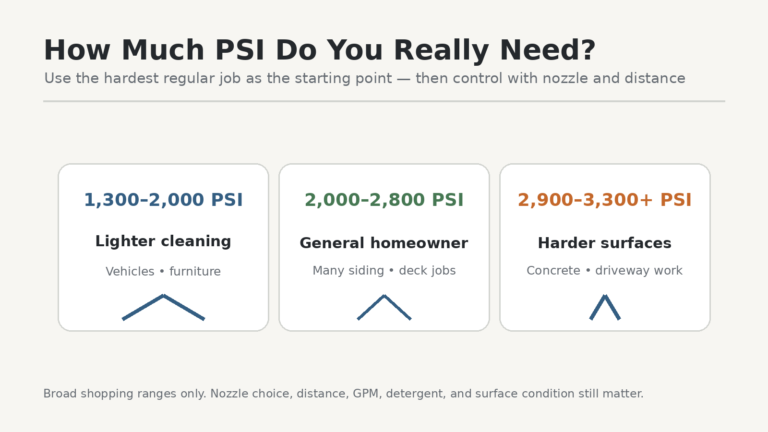
Mistake 1: Buying Only by PSI
PSI gets most of the attention, but it is not the whole story.
Water flow, nozzle choice, surface type, and cleaning technique all matter. A machine with a huge PSI number is not automatically the right tool for your job.
For more on that, see: PSI vs GPM: What Matters More in a Pressure Washer?
Mistake 2: Buying Gas for Small Jobs
Some homeowners buy a gas pressure washer because it feels like the “serious” choice.
Then they realize it is loud, heavy, and annoying to pull out for quick cleaning.
If you mostly wash patio chairs, trash cans, and a car now and then, gas may be more machine than you want to deal with.
Mistake 3: Buying Electric for Heavy Concrete Work
The opposite mistake is buying a small electric pressure washer and expecting it to blast years of grime off a large driveway quickly.
It may still clean, but it may take longer than you expect.
If concrete is the main job, pay close attention to cleaning power and consider whether a gas model and surface cleaner make more sense.
Mistake 4: Ignoring Accessories
The pressure washer itself is only part of the setup.
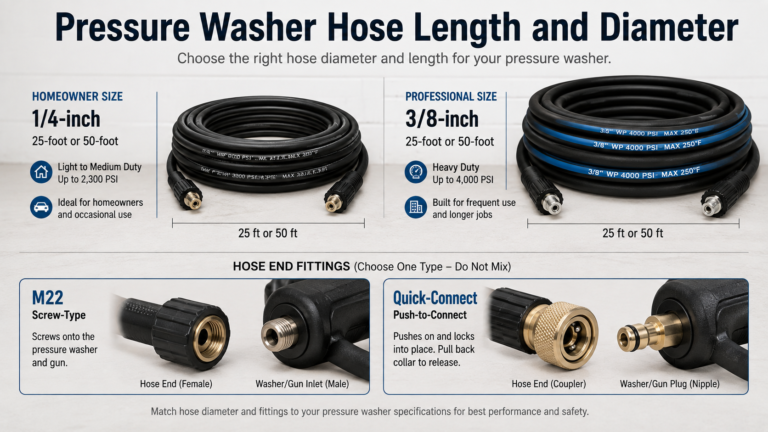
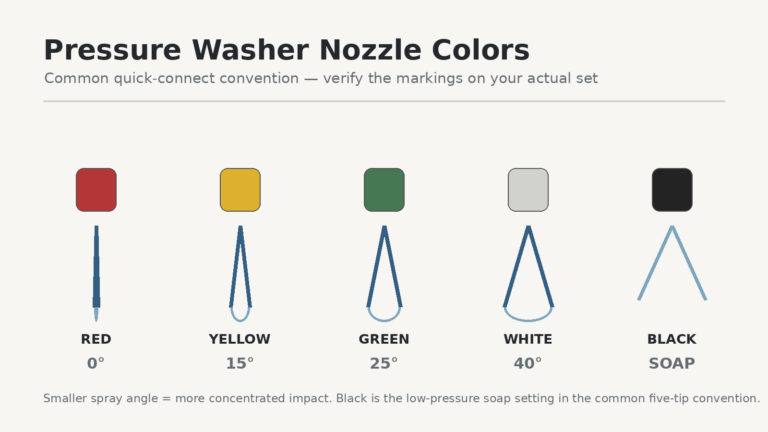
Nozzles, hoses, surface cleaners, and quick-connect fittings can make a big difference in how useful the machine feels.
A modest pressure washer with the right accessories may be more useful than a stronger one with a stiff hose and poor setup.
Mistake 5: Using Too Much Pressure on Delicate Surfaces
More pressure is not always better.
Painted surfaces, wood, car finishes, window seals, and older materials can be damaged by aggressive pressure or the wrong nozzle.
Start gently, use the correct tip, and test in a less visible area when needed.
So Which One Should Most Homeowners Buy?
Most homeowners should start by considering an electric pressure washer.
That is not because electric is stronger. It is because electric is usually easier to use, easier to store, and good enough for many common cleaning jobs.
Choose electric if you mostly clean:
Cars
Outdoor furniture
Trash cans
Small patios
Light siding dirt
Small walkways
Garden items
Occasional household messes
Choose gas if you regularly clean:
Large driveways
Concrete pads
Long sidewalks
Heavy grime
Brick or masonry surfaces
Large fences
Outdoor equipment
Bigger properties with fewer nearby outlets
If you are right in the middle, think about what annoys you more: slower cleaning or equipment maintenance.
If slow cleaning would drive you nuts, gas may be worth it.
If maintenance would make you avoid the tool, electric may be the smarter buy.
Bottom Line
The electric vs gas pressure washer decision is really a convenience vs power decision.
An electric pressure washer is usually the better fit for light to medium homeowner jobs, especially if you want something simple and easy to store.
A gas pressure washer is better for bigger, dirtier, more time-consuming jobs, especially concrete and large outdoor surfaces.
Do not buy the most powerful machine just because the number looks impressive. Buy the pressure washer that fits the jobs you will actually do.
That is how you avoid overspending, underbuying, or ending up with a tool you do not want to use.
Related Reading
PSI vs GPM: What Matters More in a Pressure Washer?
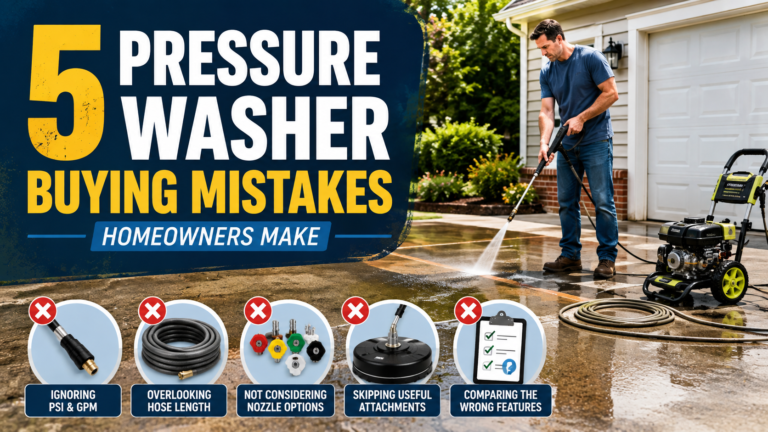
5 Pressure Washer Buying Mistakes Homeowners Make
What Size Pressure Washer Do You Need for Concrete?
Do You Need a Surface Cleaner for a Pressure Washer?
Pressure Washer Hose Length and Quality: What Homeowners Overlook?