5 Pressure Washer Buying Mistakes Homeowners Make
Buying a pressure washer sounds simple until you start comparing the numbers. One model has more PSI. Another has more GPM. One is electric and easy to store. Another is gas and looks like it could strip paint off a bridge.
That is where a lot of pressure washer buying mistakes begin.
This guide will help you avoid the most common mistakes homeowners make before spending money on a pressure washer. The goal is not to convince you that one type is always best. The goal is to help you buy the right kind of machine for the jobs you actually plan to do.
Quick Answer: The Biggest Pressure Washer Buying Mistakes
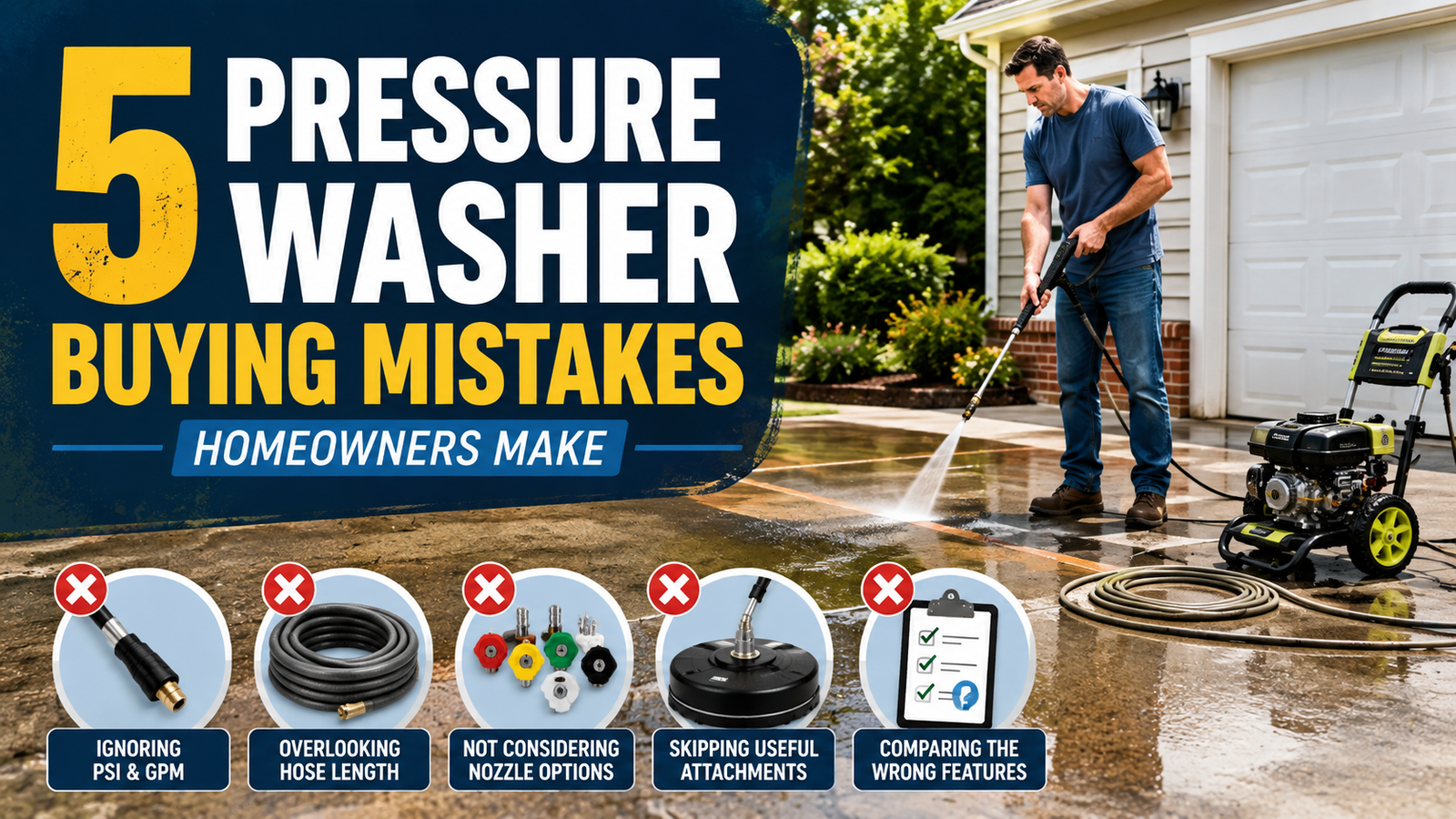
The biggest pressure washer buying mistakes are focusing only on PSI, ignoring GPM, buying too much or too little machine, skipping useful accessories, and assuming every pressure washer is safe for every surface.
For most homeowners, the best choice is usually not the most powerful pressure washer available. It is the one that matches your main jobs, your storage space, your comfort level, and the surfaces you need to clean.
A good homeowner setup usually balances:
- Enough pressure to clean effectively
- Enough water flow to rinse dirt away
- The right nozzle for the surface
- A hose that is not miserable to use
- Accessories that save time without adding unnecessary cost
Pressure Washer Buying Mistakes Start With Misreading the Specs
Pressure washer specs can be confusing because the numbers look more exact than they really are.
It is easy to look at two machines and assume the one with the higher PSI is automatically better. That is not always true.
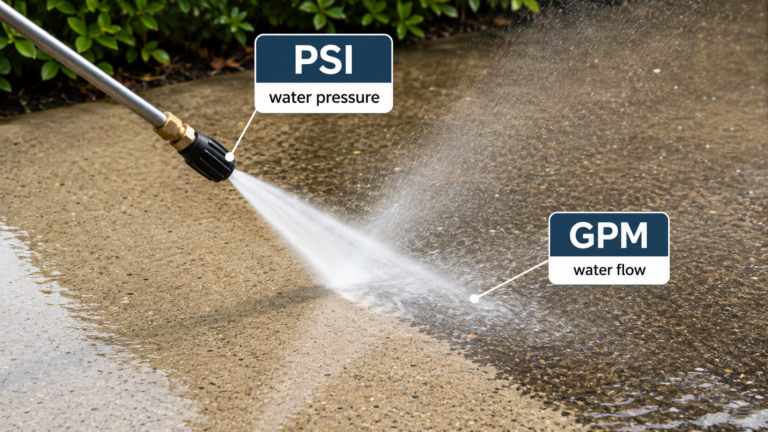
PSI tells you pressure. GPM tells you water flow. Both matter. Simpson’s manufacturer FAQ explains that PSI provides stripping force while GPM provides rinsing power.
A pressure washer with high pressure but low water flow may loosen dirt but rinse slowly. A machine with balanced pressure and flow may be easier to use for everyday cleaning, especially on patios, siding, cars, outdoor furniture, and small concrete areas.
For a deeper explanation, see PSI vs GPM: What Matters More in a Pressure Washer?
Mistake #1: Buying Based on PSI Alone
This is probably the most common mistake.
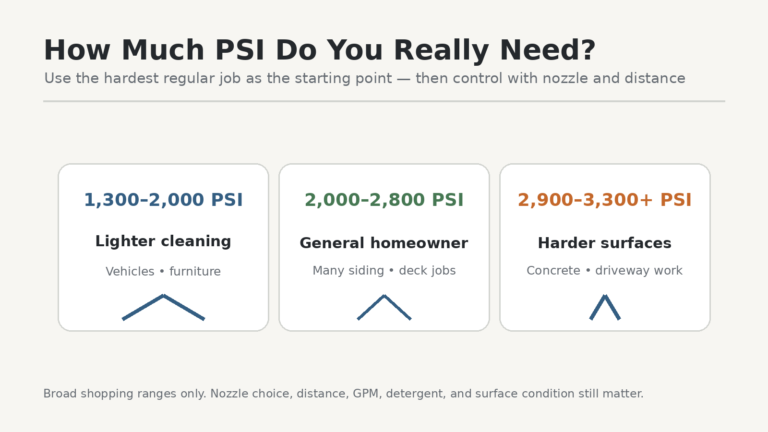
PSI stands for pounds per square inch. It measures pressure. Higher PSI can help with tougher cleaning jobs, but it also increases the chance of damaging surfaces if you use the wrong tip or get too close.
More PSI does not automatically mean faster cleaning.
For example, if you are cleaning a driveway, the water also needs enough flow to move dirt, grime, and loosened debris away. If the flow is weak, you may spend more time making repeated passes.
For delicate surfaces, too much pressure can be a problem. It can damage wood, strip paint, force water behind siding, mark concrete, or harm a car’s finish if used carelessly.
What to Look at Instead
Do not ignore PSI, but do not shop by PSI alone.
Look at:
- PSI for cleaning force
- GPM for rinsing and coverage
- Nozzle options
- Hose quality
- Whether the unit fits your real jobs
- Whether you want electric convenience or gas power
A balanced pressure washer is often more useful than one that only wins on one spec.
Mistake #2: Buying Gas When Electric Would Be Enough
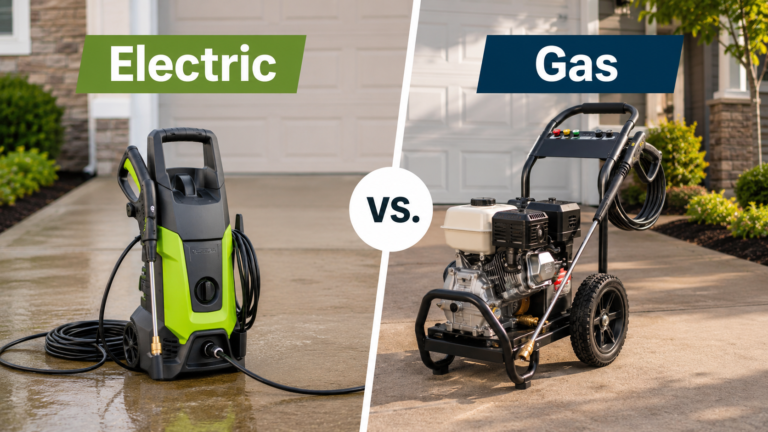
Gas pressure washers often offer pressure-and-flow combinations suited to larger or more demanding jobs. If you are cleaning a long driveway, large patio, heavily stained concrete, brick, or masonry, gas power may make sense.
But not every homeowner needs that.
Gas pressure washers are louder. They need fuel. They require more maintenance. They take more effort to store and start. Gas pressure washers produce carbon monoxide. The CDC says to operate a gasoline-powered washer outdoors and at least 20 feet from windows, doors, and vents.
Electric pressure washers are usually easier to live with. For smaller jobs, they may be the better fit.
Electric can make sense for:
- Outdoor furniture
- Small patios
- Light-duty concrete cleaning
- Trash cans
- Vinyl fences
- Occasional homeowner use
- Basic rinsing and cleanup
Gas can make sense for:
- Large driveways
- Frequent concrete cleaning
- Heavier buildup
- Bigger outdoor projects
- Jobs where cleaning speed matters more
The mistake is not buying gas. The mistake is buying gas just because it seems more serious.
For more detail, see Electric vs Gas Pressure Washer: Which One Should Homeowners Buy?
Mistake #3: Buying Too Little Machine for Concrete
The opposite mistake is buying a small pressure washer and expecting it to handle every job quickly.
Light-duty electric pressure washers can be useful, but concrete is one of the places where underpowered machines can feel frustrating. They may clean, but slowly. You may end up making narrow passes, stopping often, and still getting uneven results.
Concrete cleaning usually benefits from a stronger overall setup, especially if the surface has years of dirt, algae, mildew, or tire marks.
That does not mean every homeowner needs the biggest gas model available. It does mean you should be honest about the size of the job.
A small patio is different from a two-car driveway. A lightly dirty walkway is different from stained concrete that has not been cleaned in years.
Mistake #4: Forgetting the Accessories That Make the Job Easier
Some pressure washer accessories are gimmicky. Others can make a real difference.
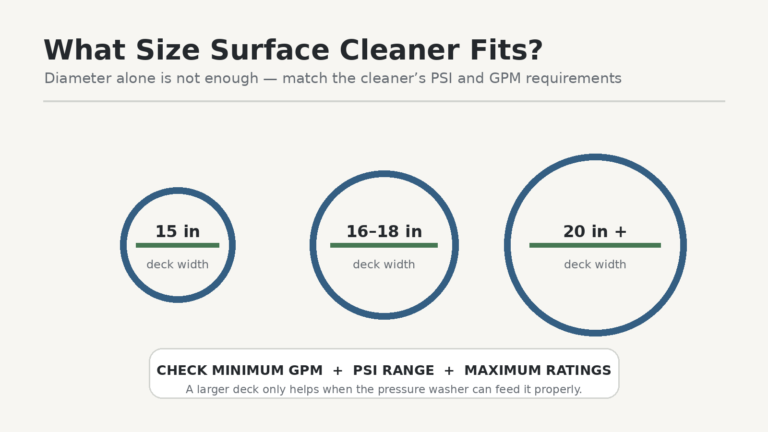
A surface cleaner is a good example. If you are cleaning flat concrete, a surface cleaner can help you cover more area evenly. It can also reduce the streaky “wand marks” that happen when you clean a driveway one narrow strip at a time.
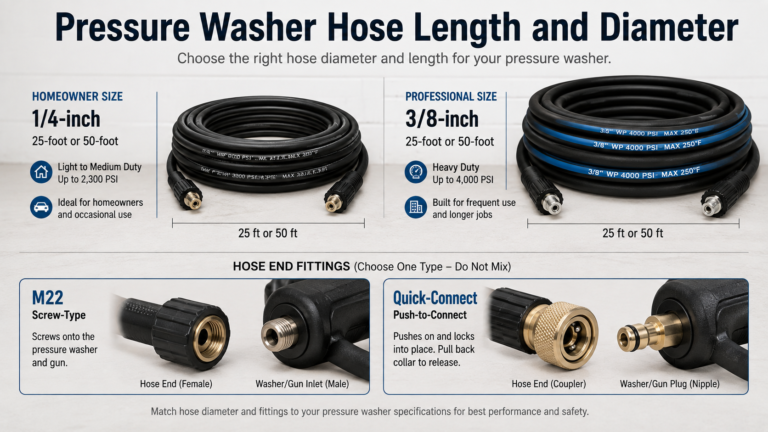
A better hose can also matter more than people expect. Some cheaper hoses are stiff, short, and annoying to fight with. If the hose constantly twists, kinks, or pulls the machine around, the whole job feels harder.
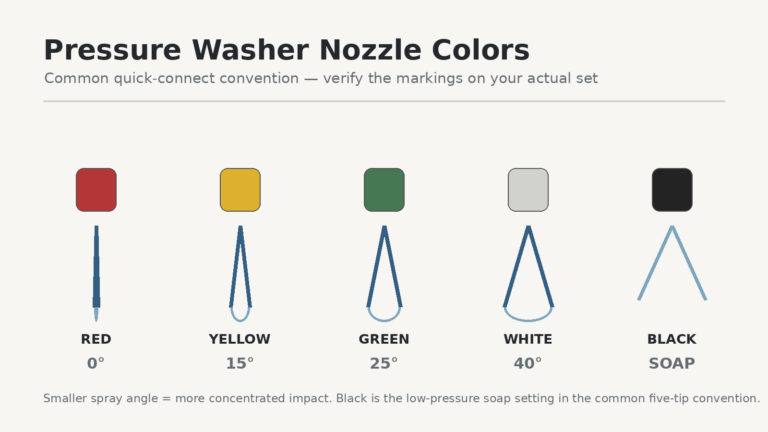
Nozzle tips matter too. The wrong nozzle can either clean too slowly or put too much force into one small area.
Mistake #5: Assuming One Pressure Washer Can Safely Clean Everything
A pressure washer is not just a stronger garden hose.
The same machine that cleans concrete may be too aggressive for wood, painted surfaces, screens, older siding, roof shingles, or a vehicle’s paint if used carelessly.
The danger is not only the machine. It is the combination of pressure, nozzle, distance, angle, and surface.
For example:
- A narrow tip concentrates force into a smaller area.
- Getting too close increases the chance of damage.
- Spraying upward under siding can force water where it should not go.
- Using too much pressure on wood can leave marks.
- Using high pressure near windows, seals, or trim can cause problems.
Start with a wider spray pattern and more distance than you think you need. Test a small area first. Move closer only if the surface can handle it.
More Common Mistakes to Watch For
Pressure washer buying mistakes are not always about the machine itself. Sometimes they are about the whole setup.
Ignoring Storage
A pressure washer that is annoying to store may not get used. Think about where it will go, whether it needs winter storage, and how much space the hose, wand, accessories, and detergent bottles will take.
Forgetting About Setup Time
Some people want quick cleanup. Others do not mind dragging out hoses, fuel, extension cords, and accessories. Be honest about which person you are.
A powerful machine that you avoid using is not a great buy.
Overbuying for One Job
If you only need to clean one small patio once a year, it may not make sense to buy a large gas model. Renting, borrowing, or buying a smaller electric unit may be more reasonable.
Underbuying for Repeated Big Jobs
If you have a long driveway, large patio, and lots of concrete, buying the cheapest light-duty machine may lead to frustration. The job may still get done, but slowly.
What This Means Before You Buy
Before buying a pressure washer, write down the jobs you actually expect it to do.
Not the fantasy version where you clean every surface on the property every weekend. The real version.
Ask yourself:
- Am I mostly cleaning small items or large surfaces?
- Do I need convenience or power more?
- Will I use this often enough to justify a gas model?
- Do I have a good place to store it?
- Am I cleaning delicate surfaces, concrete, or both?
- Will I need a surface cleaner or better hose?
- Do I understand the nozzle tips well enough to avoid damage?
The right pressure washer is the one that fits your real use, not the one with the most impressive number.
Common Mistakes
Here is the short version:
- Do not buy by PSI alone.
- Do not ignore GPM.
- Do not buy gas unless the extra power is worth the noise, maintenance, storage, and fuel.
- Do not expect a small machine to clean a large driveway quickly.
- Do not forget accessories like a surface cleaner, hose, and nozzle set.
- Do not assume every surface can handle high pressure.
- Do not skip compatibility checks on hoses, nozzles, and attachments.
A pressure washer can be a very useful tool, but it is also easy to buy the wrong one if you only compare the biggest numbers.
Bottom Line
The most common pressure washer buying mistakes come from shopping by the wrong signals.
Higher PSI is not always better. Gas is not always the smarter choice. Cheap accessories can make a decent machine frustrating. And the wrong nozzle can turn a simple cleaning job into damage you did not need.
For most homeowners, the better approach is simple: match the pressure washer to the work.
If you clean large concrete areas often, you may want more power and a surface cleaner. If you mostly do light outdoor cleanup, an electric unit may be easier to own. If you are somewhere in the middle, look for a balanced setup instead of chasing one impressive spec.
Buy for your actual jobs, not the biggest number on the box.
Related Reading
- Pressure Washer Buying Guides
- PSI vs GPM: What Matters More in a Pressure Washer?
- Electric vs Gas Pressure Washer: Which One Should Homeowners Buy?