Shop Vac vs Dust Extractor: Which One Do You Actually Need?
A shop vac and a dust extractor can look suspiciously similar.
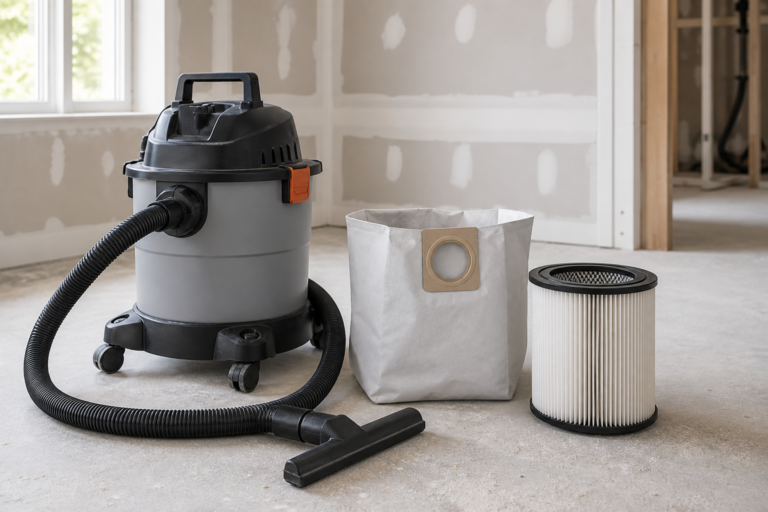
They both have a motor, a tank or bag, a filter, and a hose. Some dust extractors can even pick up liquids. Then you look at the price and wonder why one costs several times as much as the wet/dry vacuum sitting next to it.
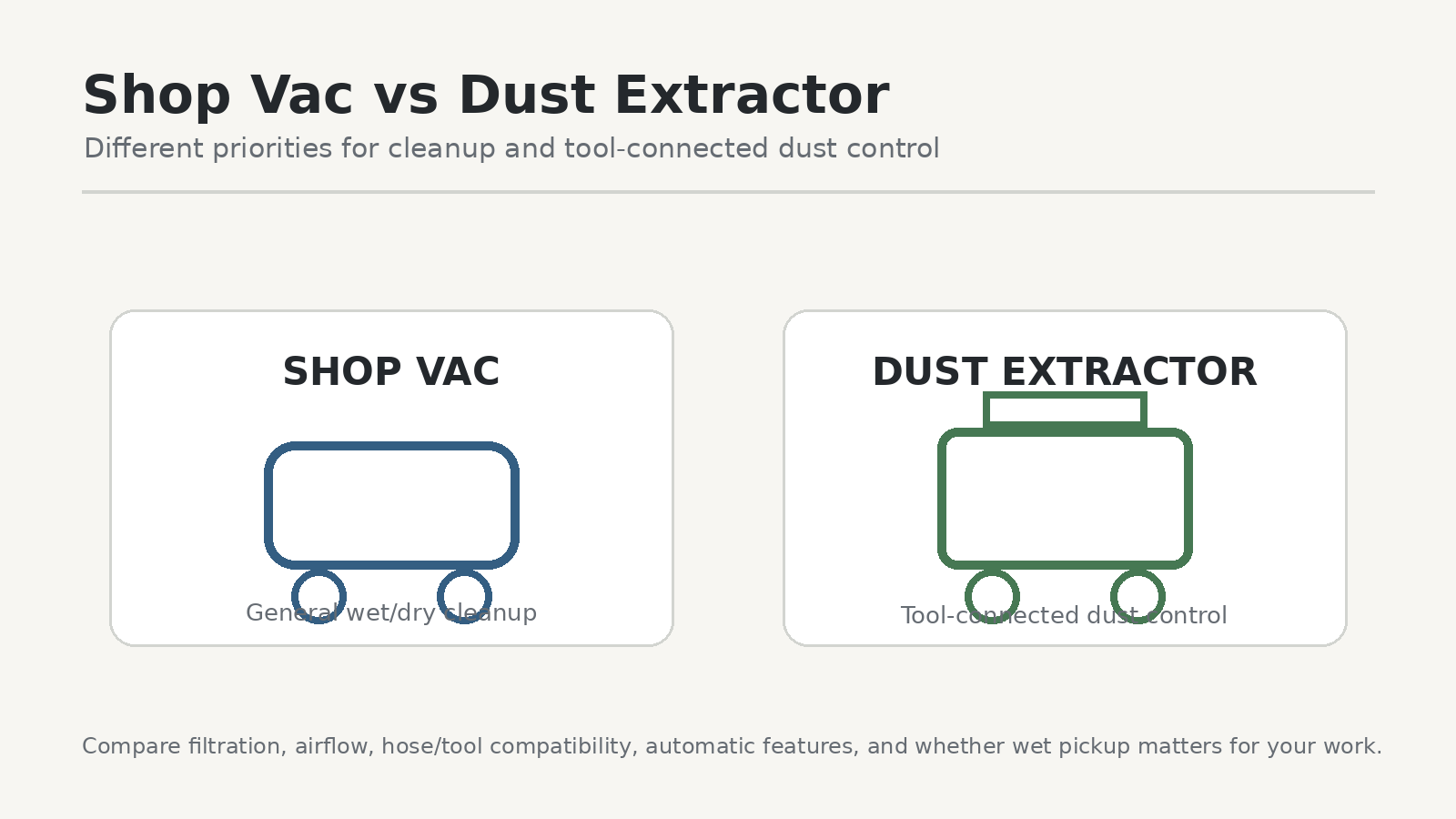
The short answer is that they overlap, but they are usually optimized for different work.
A shop vac is primarily a versatile cleanup machine. A dust extractor is designed more specifically around capturing dust at the tool and maintaining that performance while you work.
That distinction is more useful than arguing over what the two products are “really” called.
The quick answer
Buy a normal wet/dry shop vac if most of your jobs are:
- garage and basement cleanup;
- car interiors;
- wet spills;
- sawdust and chips after the work is done;
- occasional connection to a tool;
- general homeowner messes.
Start looking seriously at a dust extractor if most of your work is:
- sanding for long periods;
- grinding, drilling, or cutting with dust collection at the tool;
- fine-dust work where filtration and containment are central to the job;
- repeated tool-connected use where automatic start/stop matters;
- work where filter cleaning and sustained airflow are important;
- professional jobs subject to specific dust-control requirements.
There is a large middle ground. A good shop vac with the correct bag, filter, hose, and tool adapter may be perfectly useful for an occasional DIY project.
The question is not “Which machine is better?” It is “Which machine is built around what I do?”
What a normal shop vac is really good at
The wet/dry vacuum has survived for a reason. It is ridiculously useful.
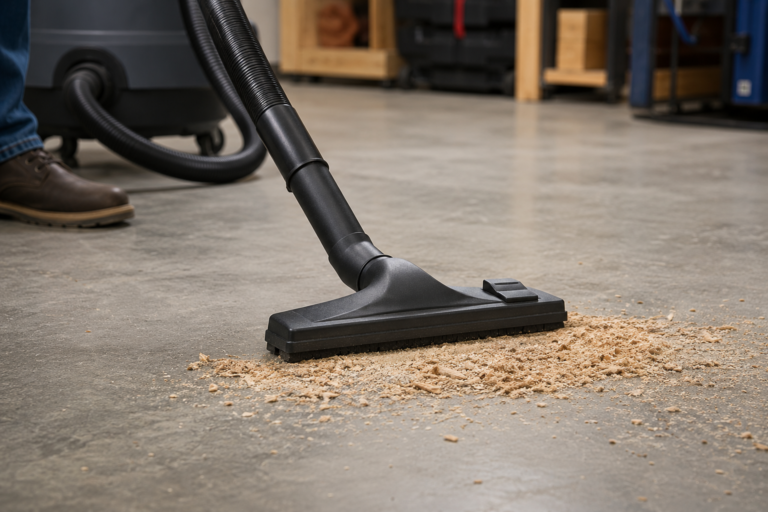
You can clean dirt from a garage, suck water from a floor, vacuum a car, pick up sawdust, chase debris around a workbench, and blow leaves with models that include a blower port.
That flexibility is its strength.
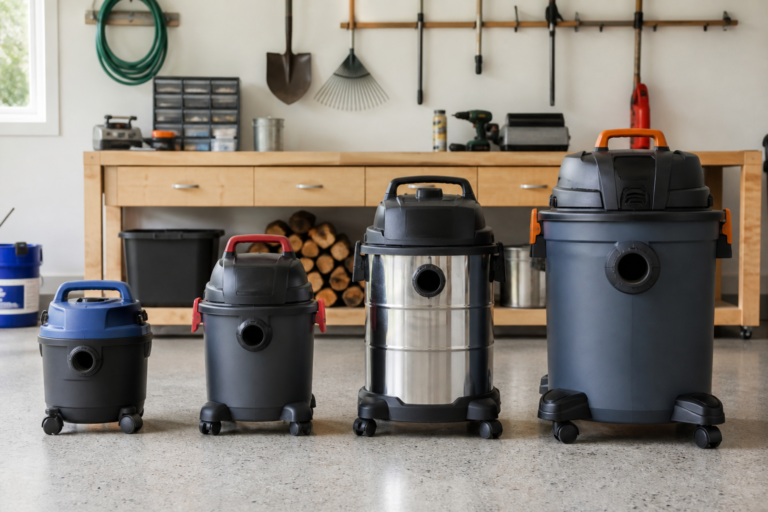
A shop vac also tends to offer a lot of tank capacity for the money.
If I needed one machine for a homeowner who sometimes does woodworking but also has a basement, cars, a garage, and occasional water messes, I would start with a shop vac.
I would just make sure I bought the right capacity, hose size, and filter options.
What a dust extractor adds
The added cost starts making sense when you look at the features manufacturers build around power-tool dust collection.
Bosch’s current HEPA dust extractors, for example, include automatic filter cleaning intended to help maintain suction as the filter loads. Bosch also offers power-tool activation so the extractor can start when the connected tool starts.
DeWalt likewise sells dust extractors with automatic filter cleaning and HEPA filtration. Festool’s extractor line emphasizes tool integration, HEPA filtration, and automatic or remote activation on compatible systems.
Those are not decorative features.
If you are sanding for twenty minutes, having the extractor start with the sander and keep its filter from loading up as quickly is fundamentally different from walking over and switching a cleanup vacuum on every time.
The machine becomes part of the tool setup rather than something you drag out afterward.
Automatic filter cleaning is a big deal with fine dust
Fine dust is very good at clogging filters.
As a filter loads, airflow drops. That can make a vacuum that seemed strong at the beginning of a job feel increasingly weak.
Some dust extractors attack that problem directly. Bosch says the automatic filter-cleaning system on models such as the VAC090AH and VAC140AH activates every 15 seconds. DeWalt also uses automatic filter cleaning on several of its extractors.
You do not need automatic filter cleaning to vacuum the garage floor.
You may appreciate it a lot more when a power tool is generating fine dust continuously.
Tool activation is one of those features you miss after you have it
With a basic shop vac, the workflow can be:
- turn on vacuum;
- turn on tool;
- make the cut or sand;
- turn off tool;
- turn off vacuum;
- repeat until you get tired of doing that.
A tool-activated extractor can eliminate most of that ritual.
Some systems use a power-tool outlet. Newer systems may also use wireless or remote activation with compatible tools.
That convenience is not enough by itself to justify an expensive extractor for everyone. But if dust collection is part of your daily workflow, it stops feeling like a luxury feature very quickly.
HEPA: look at the complete system, not just a filter listing
HEPA is where marketing language can get sloppy.
OSHA defines a HEPA filter as at least 99.97 percent efficient at removing 0.3-micrometer particles under the specified test definition.
But seeing “HEPA filter available” in an accessory list is not the same thing as proving that every configuration of the entire vacuum is a sealed, tested HEPA vacuum suitable for every hazardous material or regulated task.
For normal household dust, you may simply want better filtration.
For hazardous or regulated dust, you need to follow the material, equipment, and applicable safety requirements rather than using “it has a HEPA filter” as a shortcut.
This distinction becomes important in drywall and fine-dust cleanup.
Can you just put a HEPA filter in a shop vac?
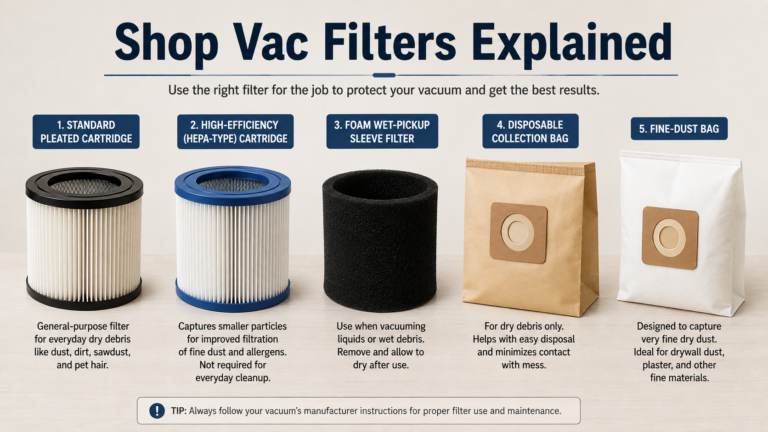
Sometimes you can install a higher-efficiency filter in a compatible wet/dry vac. Manufacturers such as RIDGID and Shop-Vac sell multiple filter grades for their machines.
That can be useful.
But it does not automatically give you all the other features of a purpose-built dust extractor:
- automatic filter cleaning;
- tool activation;
- specialized antistatic or tool hoses;
- fine-dust bags designed to protect the filter;
- system-level dust containment or compliance claims;
- specific dust-extraction adapters and tool integration.
Think of the filter as one component, not a personality transplant.
What about woodworking?
This is where the terminology gets messy because “dust collection” can mean three different things.
A shop vac is useful for cleanup and can connect well to many handheld tools.
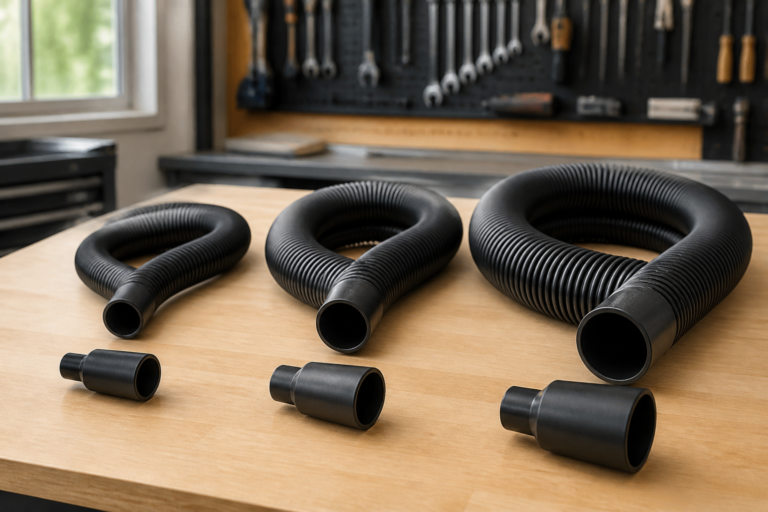
A dust extractor is optimized for pulling fine dust from tools such as sanders, track saws, grinders, and drills through relatively small dust ports.
A large stationary dust collector is a different machine again. It is generally built around moving a large volume of air through larger ducting for machines such as planers, jointers, and table saws.
I would not assume one machine replaces all three jobs.
If I had a random-orbit sander, I would be comfortable considering a shop vac or extractor depending on how much I use it.
If I had a planer making bags of chips, I would be thinking about high-volume dust collection, not which 1-1/4-inch shop-vac adapter to buy.
Which one has more suction?
This question runs into the same problem discussed in our shop-vac specifications guide.
There is no single “suction” number that makes every comparison easy.
Look at airflow, static pressure or water lift, hose diameter, filtration, and how those specifications are measured.
Dust extractors are often designed to maintain useful suction through smaller tool hoses and filters while handling fine dust. A big wet/dry vac may be designed to move larger debris through a larger hose.
Different job. Different design target.
Can a shop vac work with a sander?
Yes, often very well for occasional DIY use.
You need:
- a compatible hose or adapter;
- the appropriate filter and usually a collection bag for fine dust;
- enough airflow and suction for the tool;
- a way to keep the hose from making the sander miserable to use.
If you sand frequently, the annoyances start stacking up: manually starting the vacuum, filter loading, hose drag, noise, adapter fiddling, and fine dust.
That is the point where I would price a real extractor instead of spending $15 at a time trying to turn the shop vac into one.
Can a dust extractor replace a shop vac?
Sometimes, but I would check what you actually use the wet/dry vac for.
Many dust extractors are wet/dry capable. But a purpose-built extractor can be expensive, and its hose/tank arrangement may be optimized around tool dust rather than sucking up every acorn, screw, wood chip, and puddle in the garage.
If I owned both, I would probably let the extractor live with the tools and use the shop vac for the filthy jobs.
That is not mandatory. It is just a nice way to avoid turning an expensive fine-dust machine into the thing that cleans mud out of the car.
Who should stay with a shop vac?
I would stay with a shop vac if you are a normal homeowner and the vacuum spends most of its life cleaning things after the fact.
You can improve a shop vac substantially with the correct filter, bag, hose, and adapters.
Do not buy a dust extractor because the Internet made your perfectly useful wet/dry vac feel unsophisticated.
Who should consider the extractor?
I would move toward a dust extractor when the vacuum stops being a cleanup tool and starts becoming part of how you operate power tools.
If every sanding session begins with connecting a hose, if fine dust is a constant problem, if you care about automatic start and filter cleaning, or if the work has formal dust-control requirements, the purpose-built machine begins to make sense.
The decision I would make
If I could own only one vacuum for ordinary homeowner work, I would buy a good wet/dry shop vac.
If I spent hours every week sanding, cutting, grinding, or drilling with dust extraction attached at the tool, I would want a dust extractor.
If I did both kinds of work frequently, I would eventually want both.
That may not be the exciting answer, but it is cheaper than buying the specialized machine for jobs you do twice a year — and much less frustrating than trying to make a general cleanup vacuum behave like a professional dust system every day.