Cordless Drill vs Impact Driver: Which One Do You Need First?
A cordless drill and an impact driver can both drive screws. That is exactly why the choice confuses people.
The difference becomes clearer when you stop asking which one is “more powerful” and ask what each tool is designed to do.
A drill is the more flexible first tool for most homeowners because its adjustable chuck accepts a wide range of drill bits and driver bits. An impact driver is more specialized for fastening and can make long screws and stubborn fasteners much easier to drive.
Quick Answer
If you are buying only one tool, buy a drill/driver first for general household use.
Choose an impact driver first only if your work is heavily focused on driving screws, structural fasteners, deck screws, or similar fastening jobs and you already have another way to drill ordinary holes.
If you expect to do both regularly, a drill-and-impact combo kit is a practical pairing because the tools complement each other rather than duplicate each other.
The Basic Mechanical Difference
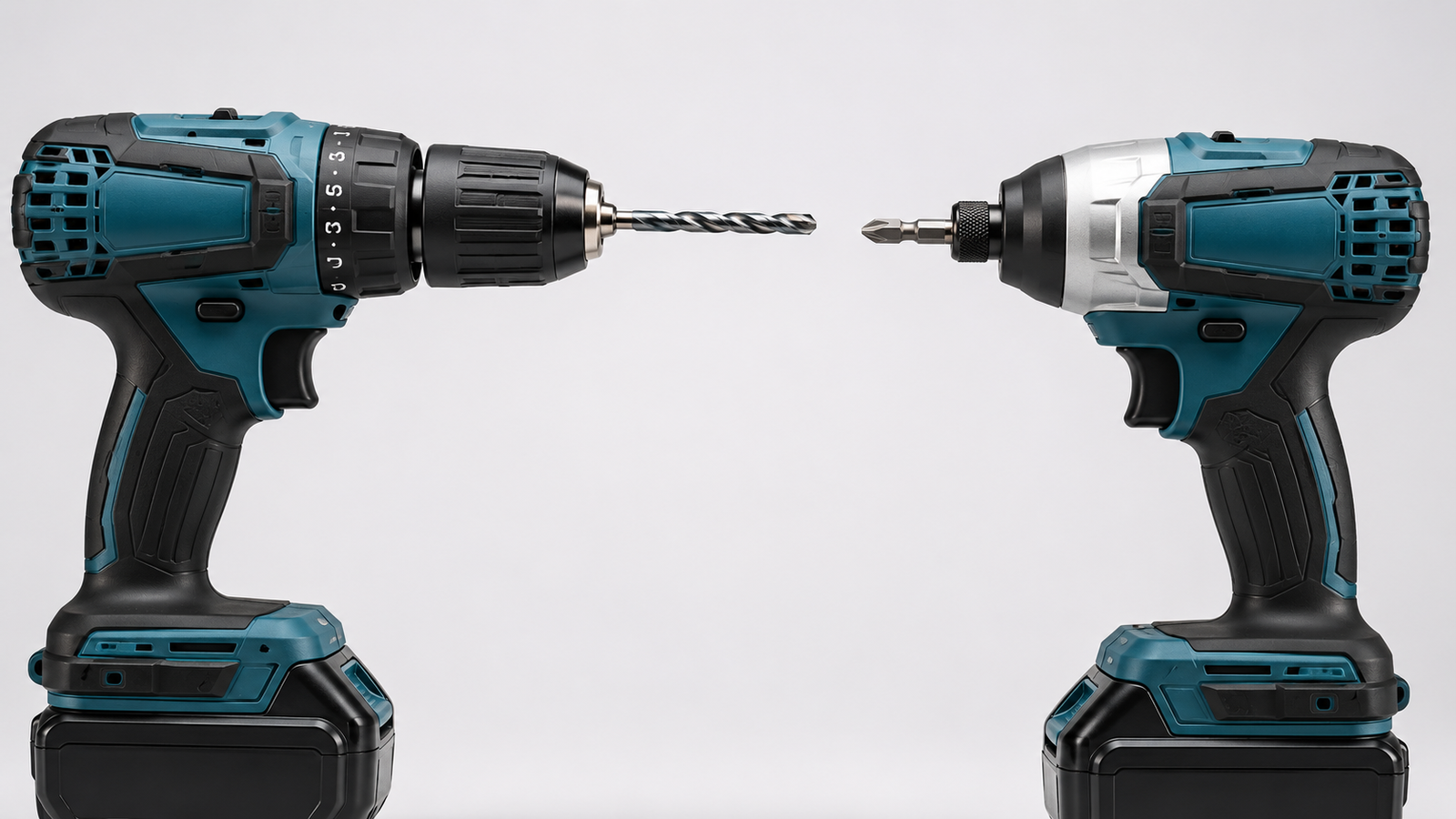
A typical cordless drill/driver uses a three-jaw chuck, commonly 1/2 inch on full-size models. That chuck can grip many round-shank and hex-shank bits.
A typical impact driver uses a 1/4-inch hex quick-change collet. It is designed around hex-shank driver bits and impact-rated accessories.
The impact driver also adds rapid rotational impacts when resistance rises. That helps deliver fastening torque without requiring the tool body to react in exactly the same way as a conventional drill under heavy load.
Manufacturer specifications make the hardware difference easy to see. Makita, for example, sells two-tool kits pairing a 1/2-inch driver-drill with a 1/4-inch hex impact driver. Milwaukee uses the same basic distinction across many of its drill and impact products.
Where the Drill Is Better
For a homeowner, the drill is the generalist.
It is usually the better choice for:
- drilling holes in wood
- drilling pilot holes
- using twist bits and spade bits within the tool’s rated capacity
- driving ordinary screws
- assembling furniture
- installing shelves and hardware
- using countersink bits
- light repair work
The adjustable chuck is the big advantage. You are not limited to 1/4-inch hex-shank accessories.
A drill also commonly includes a clutch with multiple settings. The clutch can help limit driving torque when you are installing smaller screws or working with material where overdriving is easy.
Where the Impact Driver Is Better
The impact driver earns its space when fastening becomes the hard part of the job.
It is useful for:
- longer screws
- larger structural screws within the tool and fastener manufacturer’s intended use
- deck screws
- repeated fastening
- stubborn screws
- jobs where a compact tool head helps in tight spaces
The rotational impacts let the tool keep working as resistance rises. The impact action can also reduce the steady twisting reaction at the handle compared with forcing a conventional drill through the same heavy fastening job.
That does not mean an impact driver is gentle. It is easy to overdrive screws, damage small fasteners, or break bits if you use too much tool for the job.
Can an Impact Driver Drill Holes?
Yes, with the right impact-rated hex-shank drill bits.
That does not make it a full replacement for a drill.
The 1/4-inch hex collet limits the accessories you can use directly. A drill chuck accepts a much broader range of bit shanks and is usually the more natural choice when the job is primarily making holes rather than driving fasteners.
DEWALT and other manufacturers sell impact-ready drill and driver accessories precisely because impact drivers can be used for some drilling work. The key word is some.
Can a Drill Do an Impact Driver’s Job?
Often, up to a point.
A decent drill can drive a lot of household screws. If your jobs are hanging shelves, assembling furniture, installing cabinet hardware, and doing occasional repairs, you may never feel deprived without an impact driver.
The difference shows up as fasteners get longer, tougher, or more repetitive. At that point the impact driver can turn a frustrating job into a routine one.
Why Torque Numbers Can Mislead You
Impact drivers are often advertised with much higher torque figures than drills. That does not mean the impact driver is simply “a stronger drill.”
The tools deliver torque differently, use different chucks, and are optimized for different jobs.
A drill’s value includes control, clutch settings, and accessory versatility. An impact driver’s value includes compact fastening performance and rotational impacts.
Do not compare one torque number and declare a universal winner.
Which One Is Better for Common Homeowner Jobs?
| Job | Better first choice | Why |
|---|---|---|
| Assemble furniture | Drill/driver | More control; ordinary driving is enough |
| Hang shelves | Drill/driver | Drill pilot holes and drive screws with one tool |
| Drill holes in wood | Drill/driver | Standard chuck accepts broad bit selection |
| Drive long deck screws | Impact driver | Fastening-focused impact action helps under load |
| Install a large number of screws | Impact driver | Faster, more comfortable for repetitive fastening |
| Basic picture hanging and repairs | Drill/driver | Impact driver is usually unnecessary |
| Build a deck or framing project | Both | Drill holes with one while the other stays set up for fastening |
Why Owning Both Can Be More Useful Than Buying One Expensive Drill
A two-tool setup has a simple workflow advantage.
You can keep a drill bit in the drill and a driver bit in the impact driver. Drill the pilot hole, pick up the second tool, and drive the screw without changing bits repeatedly.
That convenience matters more than it sounds during projects with dozens of fasteners.
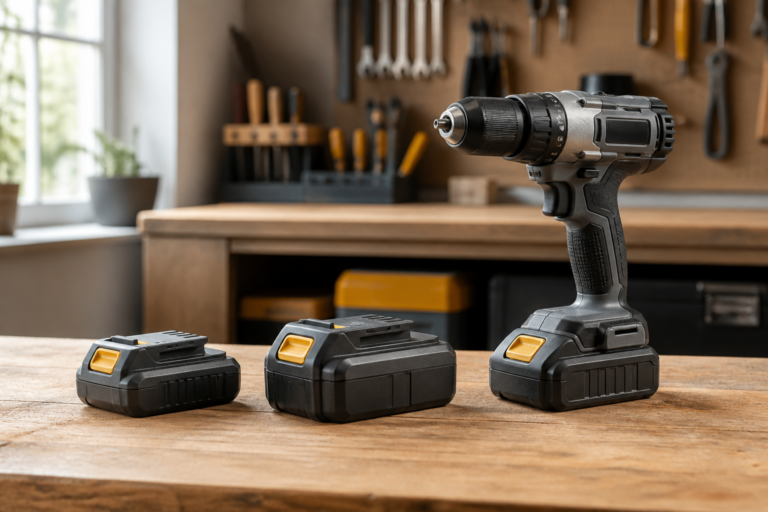
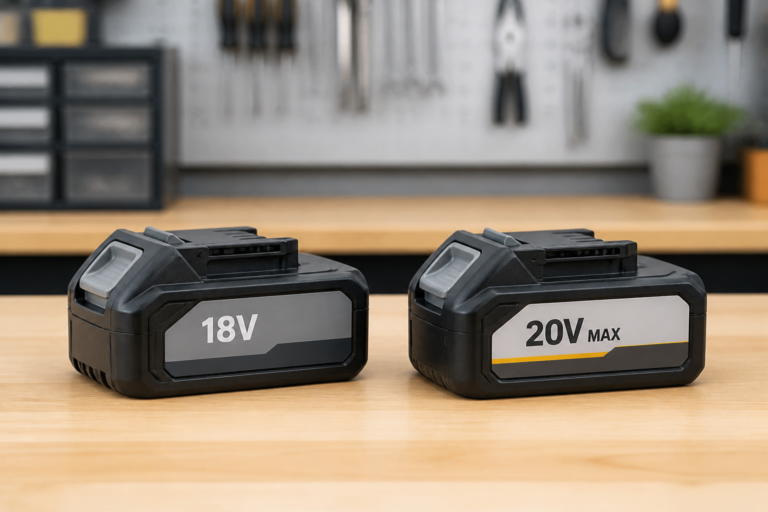
If you already own batteries in a cordless platform, a bare impact driver can also be a relatively inexpensive second tool. That is one reason platform choice matters. See Cordless Tool Platforms Explained.
What to Buy First
For a new homeowner starting from zero:
Buy the drill first.
It covers more types of work and accepts more accessories.
Then add an impact driver when you start doing projects where screw driving is frequent enough or demanding enough that the drill becomes the annoying part of the job.
If a combo kit costs only modestly more than the drill kit and you know you will use both, buying the pair can make sense from the beginning.
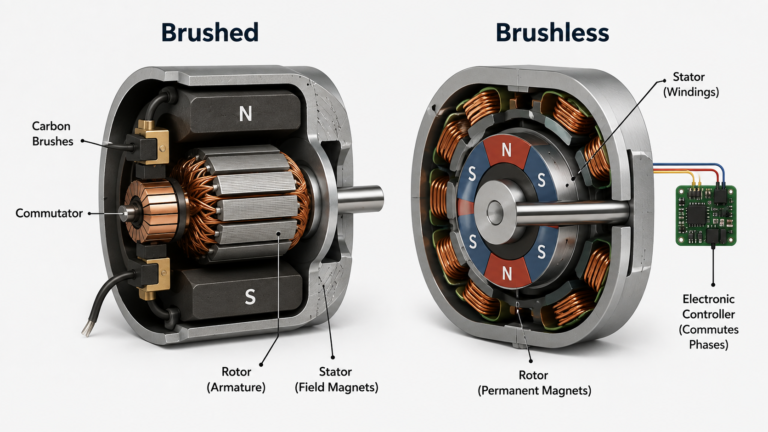
If you are comparing otherwise similar models, Brushless vs Brushed Cordless Tools explains when the motor upgrade is actually worth paying for.
Bottom Line
A drill is a general-purpose drilling and driving tool. An impact driver is a fastening specialist that becomes especially useful when screws get long, stubborn, or numerous.
Most homeowners should buy the drill first.
If you regularly build, deck, frame, or drive heavier fasteners, the impact driver quickly becomes the tool you wonder why you waited to buy.