Cordless Tool Platforms Explained: Why the Battery System Matters More Than One Tool
A cordless drill can look like a one-tool purchase. It usually is not.
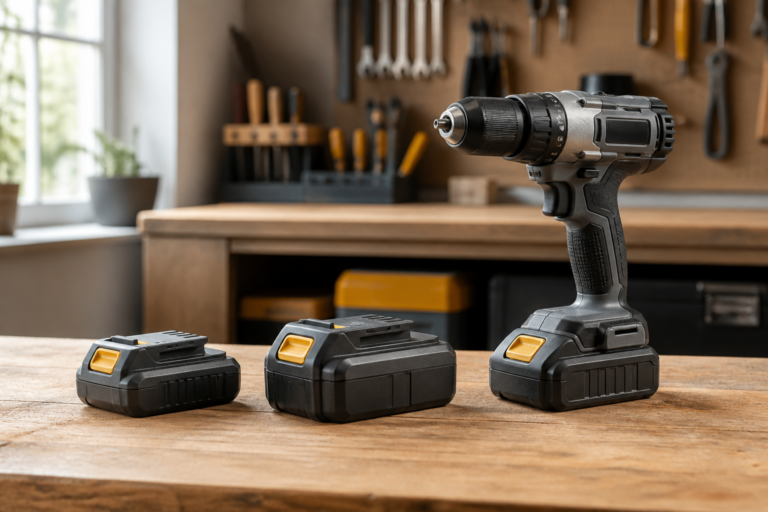
The moment you buy a cordless tool with a battery and charger, you have started buying into a platform. That platform can make future purchases cheaper and easier because compatible bare tools can reuse batteries you already own. It can also make switching brands expensive if you later discover that the tools you want live in a different system.
That is why the best cordless tool for a homeowner is not always the tool with the highest torque number or the biggest battery in the box. The battery system behind it can matter more over the next five or ten years.
Quick Answer
A cordless tool platform is the family of tools, batteries, and chargers designed to work together.
If you expect to own several cordless tools, compare the whole platform before choosing the first tool. Look at the tools you may realistically buy later, battery sizes, charger compatibility, availability, warranty, and the cost of adding bare tools.
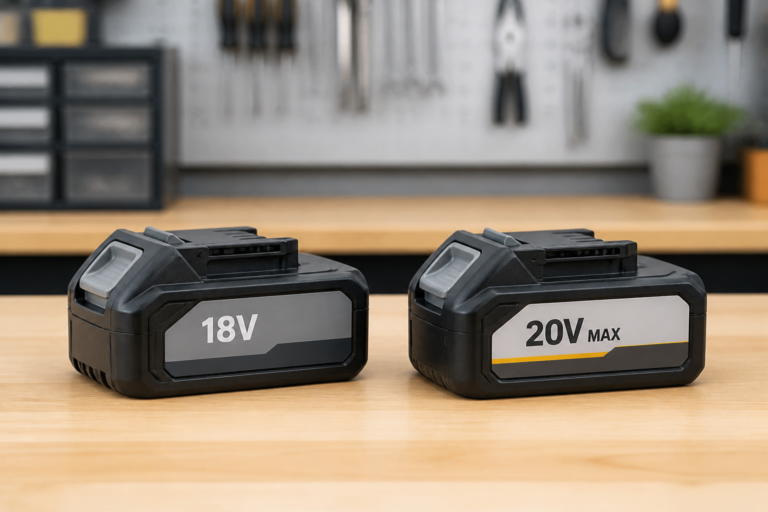
Do not assume two batteries are compatible just because both are labeled 18V or 20V. Compatibility is determined by the manufacturer’s system, physical interface, electronics, and approved combinations.
What a Cordless Tool Platform Actually Includes
At minimum, a platform includes:
- compatible tools
- compatible battery packs
- compatible chargers
- the physical battery interface
- electronic communication and protection features used by that system
Some manufacturers keep a platform deliberately broad. Ryobi, for example, states that its current 18V ONE+ batteries are compatible with any Ryobi 18V ONE+ product and describes more than 300 products in the system. Milwaukee states that all M18 batteries are compatible with M18 tools and chargers.
Those are manufacturer-specific compatibility statements. They do not mean a Ryobi 18V battery fits a Milwaukee M18 tool, or that voltage labels alone establish compatibility.
Why the First Battery Is More Important Than It Looks
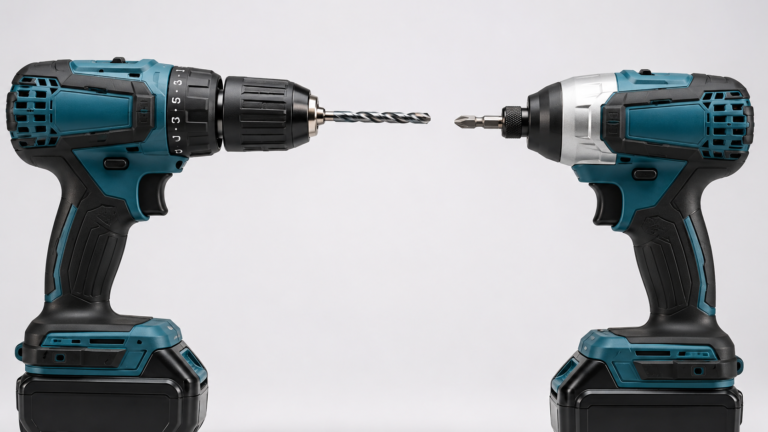
Suppose you buy a drill kit with one battery and one charger. Six months later you want an impact driver. Then maybe a circular saw, tire inflator, light, leaf blower, or small shop vacuum.
If those tools are all available in the same system, you may be able to buy some of them as bare tools and use batteries you already own.
If they are not, each new platform may require its own batteries and charger.
The hidden cost of switching is not just the price of the new tool. It can include:
- a second charger
- duplicate battery capacity
- more storage space
- more batteries to keep charged
- fewer opportunities to share packs among tools
That does not mean you should never own more than one platform. Sometimes a second system makes perfect sense. It means the switching cost should be part of the decision instead of a surprise afterward.
Bigger Platforms Are Not Automatically Better
A manufacturer can advertise hundreds of compatible products, but the number only matters if those products overlap with what you may actually buy.
A homeowner who expects to own a drill, impact driver, circular saw, oscillating tool, light, and blower may care about a broad general-purpose system.
Someone who only needs a compact drill and screwdriver may care more about low weight, small batteries, and easy storage.
Someone building a serious workshop may care about specialty saws, nailers, routers, dust extraction, high-output batteries, and service support.
The useful question is not, “Which company has the most cordless tools?”
It is, “Does this system have the tools I am likely to want at prices and sizes that make sense for me?”
Battery Capacity Changes the Feel of the Tool
Within the same platform, battery packs often come in several amp-hour capacities and sometimes different performance tiers.
A larger-capacity battery usually stores more energy, but it also tends to add weight and bulk. A compact battery can make a drill or impact driver noticeably easier to handle overhead or in tight spaces.
That tradeoff is why one giant battery is not automatically the smartest purchase for every tool.
For a deeper explanation of voltage, amp-hours, and watt-hours, see Cordless Tool Battery Voltage vs Amp-Hours: What Actually Matters?.
18V and 20V Labels Do Not Tell You the Platform
Voltage naming can be confusing. DEWALT, for example, states that its 20V MAX packs have a maximum initial voltage of 20 volts and a nominal voltage of 18 volts.
That does not make every 18V pack compatible with every 20V MAX tool. It only explains why nominal-voltage labels and maximum-voltage labels can describe the same general lithium-ion cell arrangement.
Compatibility still belongs to the platform.
See 18V vs 20V MAX Tools: What the Voltage Labels Really Mean for the voltage-label issue specifically.
Bare Tool vs Kit Is Really a Platform Question
When you have no compatible batteries, a kit can make sense because it gives you the tool, battery, and charger together.
Once you already have enough compatible batteries, buying another kit can mean paying for battery capacity you do not need. A bare tool may be the better value.
There are exceptions. A kit sale can sometimes cost little more than the bare tool, or include a battery size you actually need. Compare the complete package rather than following a fixed rule.
What to Check Before Committing to a Platform
Before buying the first tool, look beyond that product page.
Check:
- The next five tools you might buy. Are they available in the same system?
- Battery sizes. Are there compact and higher-capacity choices?
- Charger support. Will one charger handle the batteries you are considering?
- Bare-tool pricing. Does staying in the system actually save money later?
- Availability. Can you buy batteries and tools easily from retailers you use?
- Specialty gaps. Is there one important tool the platform does not offer?
- Battery compatibility notes. Verify the exact manufacturer-approved combinations rather than assuming from voltage.
When a Second Platform Makes Sense
Platform loyalty should save money or reduce friction. It should not trap you into buying the wrong tool.
A second platform can make sense when:
- another manufacturer has a tool that better fits a specific job
- a compact 12V-class system is useful alongside a larger system
- a specialty outdoor tool requires a different battery system
- the price difference is large enough to outweigh battery duplication
- you are replacing an old system gradually rather than all at once
The goal is not brand loyalty. The goal is avoiding unnecessary duplication while still buying tools that fit the work.
For more cordless-tool guides, see Cordless Tool Buying Guides.
Bottom Line
A cordless tool is rarely just a cordless tool. It is usually the first piece of a battery ecosystem.
If you expect to buy several tools, choose the platform before obsessing over one drill specification. Look at compatibility, battery options, chargers, future tools, and the cost of switching.
The smartest first purchase is the one that still makes sense after the third or fourth tool joins it.