Can the AlorAir Sentinel HD55S Be Controlled Without the App?
AlorAir says the Sentinel HD55S Wi-Fi model does not offer an official API for scripts or third-party integrations; supported remote control uses the AlorAir-C app.
Simple explanations of confusing product specs like PSI, GPM, watts, amps, volts, amp-hours, CFM, torque, lumens, and cord gauge.
AlorAir says the Sentinel HD55S Wi-Fi model does not offer an official API for scripts or third-party integrations; supported remote control uses the AlorAir-C app.
Yes. AlorAir says the Sentinel HDi65S has automatic memory/restart and resumes its previous settings after power is restored.
The HDi65S uses 115V power and its manual specifies a grounded 3-prong GFCI outlet, 15-amp circuit protection, and no extension cord.
The Sentinel HDi65S condensate pump is rated for up to 19.6 feet of lift. Here is what that number means for a crawl-space or basement drain setup.
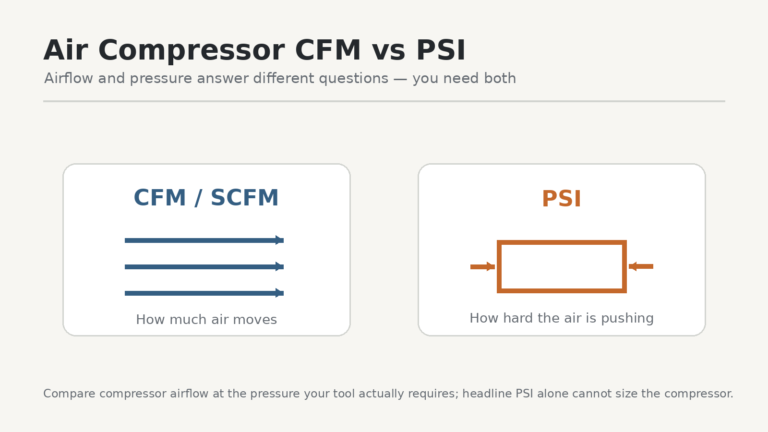
Air compressor shopping gets confusing because the biggest number on the tank is usually PSI, while the number that decides whether an air tool keeps working is often CFM. Then there are gallons, horsepower, SCFM, duty cycle, decibels, oil-free pumps, and “maximum” ratings. A compressor can look powerful on the box and still be a…
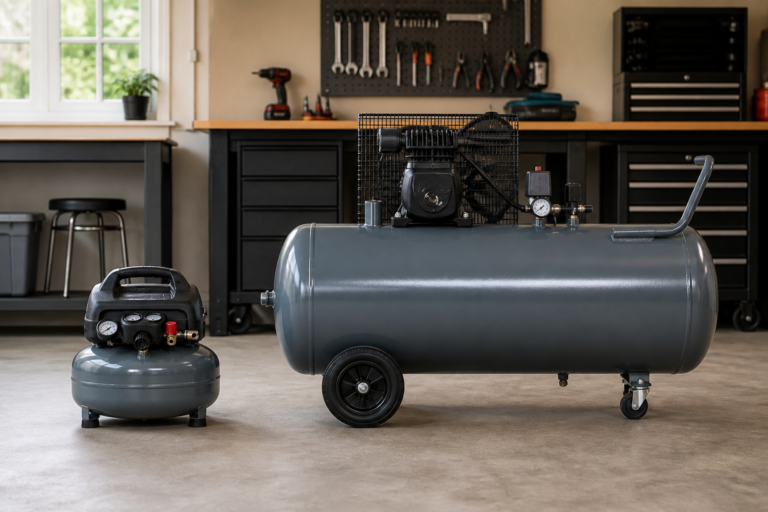
Air-compressor tank gallons tell you stored-air capacity, not pump output. Learn what bigger tanks change, what they cannot fix, and how storage affects cycling and recovery.
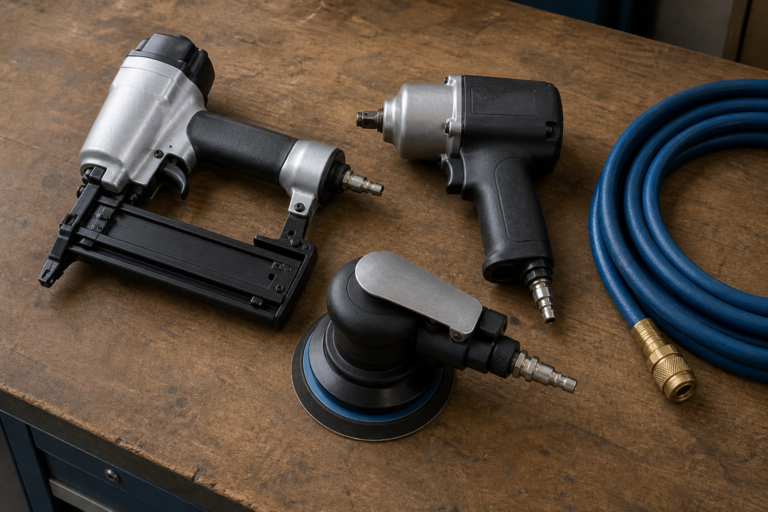
Air-tool CFM requirements vary by exact tool and usage. Use manufacturer airflow and PSI values, understand average versus loaded consumption, and size the compressor from real demand.
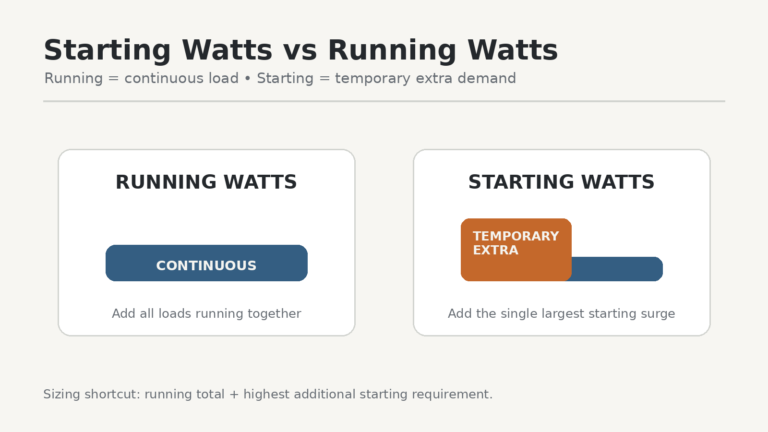
Portable generator labels usually lead with the largest wattage number. That number may be the generator’s short starting output, not the power it can deliver continuously. If you size a generator by the biggest number on the box, you can still end up with too little continuous power, the wrong outlets, or a machine that…
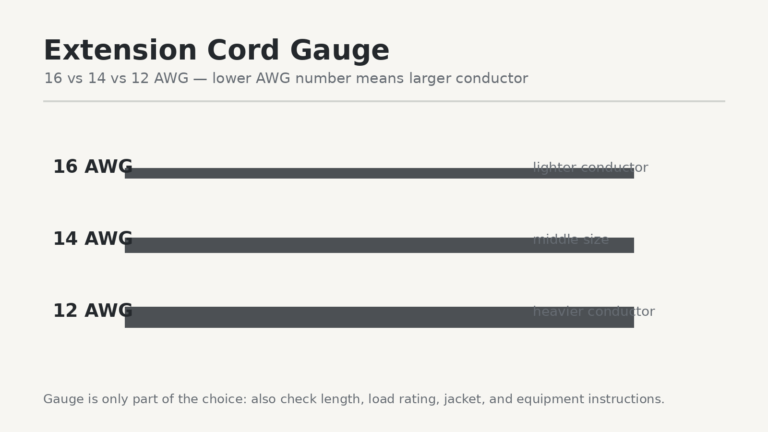
Learn how 16, 14, and 12 AWG extension cords differ, and why amp draw, cord length, ratings, and intended use all matter.

Understand what magnetic, electronic, and advanced stud finders actually detect, how depth and calibration affect results, and why every reading needs verification.