Peak HP Is Not What Makes a Shop Vac Suck Better
If you are standing in the shop-vac aisle comparing boxes, the biggest number is usually hard to miss. One says 4.5 peak horsepower. Another says 5.0. Then there is a 6.5-horsepower model sitting there looking like it ought to be able to pull the bolts out of the floor.
The problem is that peak horsepower is not the number I would use to decide which wet/dry vacuum to buy.
That is not because horsepower is completely meaningless. It is because “peak HP” does not tell you, by itself, how much air the vacuum moves, how much suction it can maintain, how well it handles fine dust, whether the hose will clog on larger debris, or whether you are going to hate dragging the thing around your garage.
Shop-Vac itself says peak horsepower is a laboratory comparison figure and does not represent the horsepower the motor produces during normal use. DeWalt makes a similar disclosure on wet/dry vac specifications.
So if peak HP is not the number to shop by, what should you look at?
For most people, I would start with CFM, sealed pressure or water lift, hose size, filtration, and the size of the mess you actually expect to clean up.
The short version
- CFM tells you how much air the vacuum can move.
- Water lift or sealed pressure tells you something different: how strongly the vacuum can pull against resistance.
- Peak horsepower is a comparison number, not normal operating horsepower.
- Hose diameter and length affect what the vacuum can move and how convenient it is to use.
- The filter matters. A clogged or wrong filter can make a good vacuum act like a bad one.
- Tank size is capacity, not suction. A 16-gallon vacuum is not automatically stronger than a smaller one.
That is the part the box does not always make obvious.
What “peak horsepower” actually means
Shop-Vac defines peak horsepower as a figure used by the wet/dry vacuum industry for consumer comparison. The company specifically says it does not represent the operational horsepower of the vacuum and that the motor does not run at the advertised peak horsepower during normal use.
That matters because it is very easy to look at a 6.5-peak-HP machine and assume it must have more useful suction than every 5-HP machine.
It might. But the horsepower number alone does not prove it.
You can see why by looking at published specifications from real wet/dry vacuums. RIDGID, for example, publishes airflow and lift specifications in addition to peak horsepower on many models. Those performance numbers tell you things the big horsepower number cannot.
I would treat peak HP as one label on the box, not as the final score.
CFM: how much air is moving?
CFM means cubic feet per minute. In plain English, it is a measure of airflow.
For a shop vac, airflow matters because moving air carries dust, chips, dirt, and debris through the hose.
Shop-Vac explains that the airflow you actually get depends on the whole system, not just the motor. Hose size and length, the attachment on the end, and the filter all add resistance. A dirty filter can reduce performance substantially.
That is useful to remember when a vacuum seems to be “losing suction.” Sometimes the motor is fine. The filter is packed, the hose is partly blocked, or the setup is restricting the airflow.
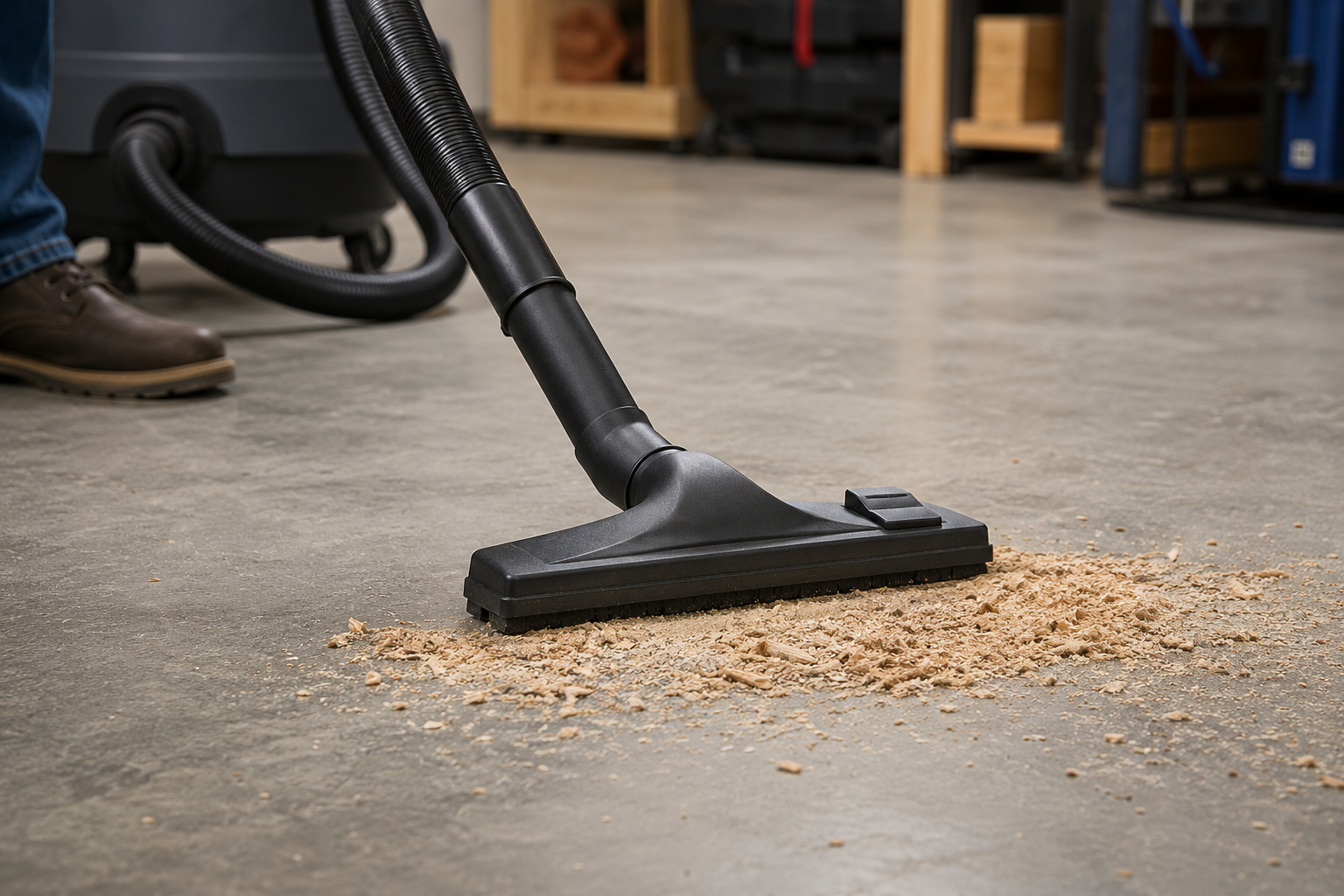
For garage cleanup, sawdust, leaves, chips, and other relatively light material, CFM is a number I would pay attention to.
Water lift: a different kind of suction
You will also see specifications called water lift or sealed pressure.
Shop-Vac describes sealed pressure as the height of a column of water the vacuum can pull vertically. It is measured in inches.
That is different from CFM.
A vacuum can be designed to move a lot of air, to pull hard against resistance, or to strike a balance between the two. That is one reason I do not like reducing the whole buying decision to a single number.
If CFM is telling you “how much air can this thing move?”, water lift is closer to “how hard can it pull when the airflow is restricted?”
Neither number tells the whole story, but together they tell you much more than peak horsepower does.
Hose size matters more than it looks
This is one of those specifications that looks boring until you are trying to suck up a wood chip that keeps getting stuck.
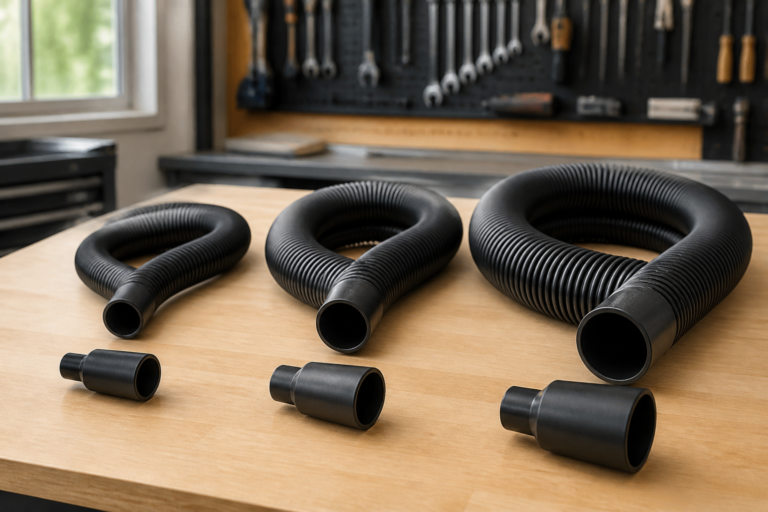
Wet/dry vacuum hoses are sold in several common diameters. RIDGID, for example, supports 1-1/4, 1-7/8, and 2-1/2-inch hose systems across its vac and accessory line, while Shop-Vac also sells multiple hose diameters.
A larger hose gives bigger debris more room to pass. A smaller hose is usually easier to snake around a car interior and use with small attachments.
So I would not automatically choose the largest hose any more than I would automatically choose the largest tank.
I break down the tradeoffs in Shop Vac Hose Size Explained.
Do not ignore the filter
A wet/dry vacuum is an air-moving system. The air eventually has to get back out.
If the filter is clogged, the whole system suffers.
Manufacturers sell different filters and collection bags for different jobs: ordinary debris, fine dust, and higher-efficiency filtration on compatible machines.
This becomes especially important with very fine dust.
If you are sanding joint compound, cutting materials that can create hazardous respirable dust, or connecting the vacuum directly to a power tool, “does it suck?” is no longer the only question. You also care about the filtration system, dust containment, and whether the equipment is appropriate for that material.
I cover the homeowner version of that problem in Can You Use a Shop Vac for Drywall Dust?. That article also explains why I would not casually call every shop vac with a HEPA-labelled filter a “HEPA vacuum.”
Tank size is not power
A 16-gallon shop vac looks more serious than a 4-gallon shop vac. Sometimes the larger machine also has stronger performance specifications. But the tank itself is not creating the suction.
The tank tells you how much the vacuum can hold.
That matters if you are cleaning big messes or picking up a lot of water. It matters much less if you mostly vacuum your car, clean around a workbench, or grab the machine for the occasional household spill.
A giant tank also takes up more room and becomes much less friendly once it contains several gallons of liquid.
This is where I would resist buying the “best” shop vac and buy the one you will actually pull out and use.
If capacity is the number you are stuck on, see What Size Shop Vac Do You Need?.
What I would compare before buying
- What am I cleaning? Car dirt, garage messes, sawdust, renovation debris, water, or tool-generated fine dust?
- CFM. How much airflow does the manufacturer publish?
- Water lift or sealed pressure. Is that specification available?
- Hose diameter and length. Will it fit the kind of debris and the places where I use it?
- Filter and bag options. Can I get the correct setup for the work I expect to do?
- Tank capacity. How much do I really need to hold before emptying it?
- Cord, storage, noise, and mobility. These are the things you notice every time you use the vacuum.
- Peak HP. I would note it, but I would not let it make the decision.
A few examples
Mostly cleaning cars
I would lean toward compact and easy to carry. I would happily give up tank capacity for a hose and attachments that are easier to maneuver inside the vehicle.
General garage and homeowner cleanup
This is where a middle-size wet/dry vac makes a lot of sense. Enough tank to handle real messes, but not so large that using it becomes a project by itself.
Woodworking or renovation debris
I would pay more attention to airflow, hose diameter, filter availability, and whether the vacuum works well with the tools and adapters I own.
Lots of fine dust from power tools
Now filtration, dust containment, tool compatibility, and filter cleaning may matter more than raw tank size. At some point you are no longer just choosing a cleanup vacuum; you are choosing part of a dust-control system. That is where shop vac vs. dust extractor becomes a real question.
The number I would stop chasing
I understand why peak horsepower gets printed in huge type. It gives shoppers one simple number to compare.
Unfortunately, shop vacs are not quite that simple.
The vacuum with the biggest horsepower number is not automatically the one that will move your debris best, stay unclogged, handle your dust appropriately, or be least annoying to own.
Start with the job. Then look at airflow, suction, hose, filtration, and capacity.
Peak horsepower can stay on the box.